Author name: Admin

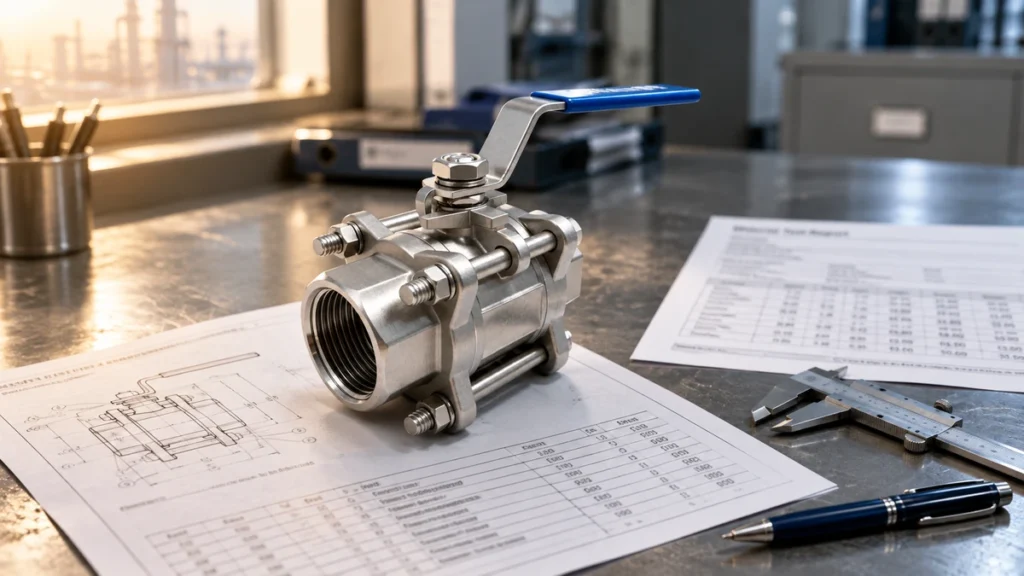
One-piece, two-piece and three-piece stainless steel ball valves on a factory workbench

1-Piece vs 2-Piece vs 3-Piece: A Practical Ball Valve Body Types Guide

Specify the wrong valve and you pay for it twice: once at purchase, and again every time a maintenance crew has to cut it out of the line. One of the most consequential — and most overlooked — choices in that decision is the valve’s construction. The three common ball valve body types (one-piece, two-piece

1-Piece vs 2-Piece vs 3-Piece: A Practical Ball Valve Body Types Guide Read More »

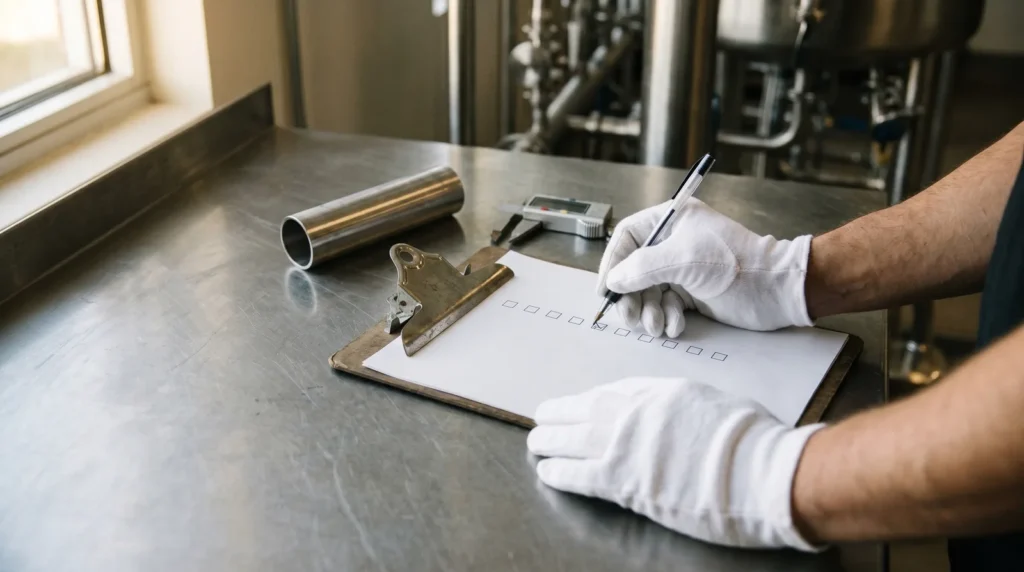
Gloved hands ticking a hygienic ball valve RFQ checklist on a clipboard beside a stainless tube sample and a caliper

Hygienic Ball Valve RFQ Checklist: 9 Points a Manufacturer Needs Before Quoting

A hygienic ball valve RFQ (request for quotation) needs nine things: the product and cleaning media, the cleaning method, pressure and temperature, any hygienic requirement in your specification, the documents your QA will ask for, the size and ferrule or tube standard, the valve function, the cycle frequency, and the actuation with its fail position.

Hygienic Ball Valve RFQ Checklist: 9 Points a Manufacturer Needs Before Quoting Read More »

Request for quotation form on a clipboard with a digital caliper, pens and a sealed shipping carton on an oak workbench in morning light

Pneumatic Actuator Ball Valve Specification: Pad Chart and RFQ Checklist

A pneumatic actuator ball valve (often listed as a pneumatic actuated ball valve) is specified by seven decisions: the valve series and size, the end connection, double acting or spring return, the fail position, the solenoid valve and its coil voltage, the temperature, and the air supply. The two charts below cover our own valve

Pneumatic Actuator Ball Valve Specification: Pad Chart and RFQ Checklist Read More »

Scroll to Top