
How a valve attaches to the pipe is not a detail to leave to whoever is doing the install. The choice of valve end connections determines how likely the joint is to leak, how much skilled labour the installation needs, whether the line can be taken apart later, and even whether the valve is suitable for your fluid at all. The three options you will meet most often on stainless ball valves — threaded, socket weld (SW) and butt weld (BW) — each have a clear set of strengths and weaknesses. This guide compares them so you can specify the right connection the first time instead of paying for it in leaks and rework.
What “Valve End Connections” Actually Means
The end connection is simply the interface machined onto each end of the valve body that mates it to the adjoining pipe or fitting. It governs three practical things at once: the integrity of the seal, the method and skill needed to install it, and how the valve behaves under pressure, temperature and vibration over time. Choosing among the common valve end connections is therefore a balance of leak risk, installation effort, future serviceability and cost — and the best answer changes with the application.
Threaded and socket-weld ends are normally used on small-bore lines (typically up to NPS 2), while butt-weld and flanged ends dominate larger and higher-integrity piping. Below we take each in turn.
Threaded Ends: Fast, Cheap and Serviceable
A threaded connection screws the valve directly onto a male or female pipe thread, sealed with PTFE tape or pipe-sealant compound. It is the most accessible of all valve end connections: no hot work, no welding certification, and the valve can be unscrewed for replacement. That makes threaded ends the default for water, compressed air, instrument lines and general utility service, and the obvious choice where welding is impractical or prohibited.
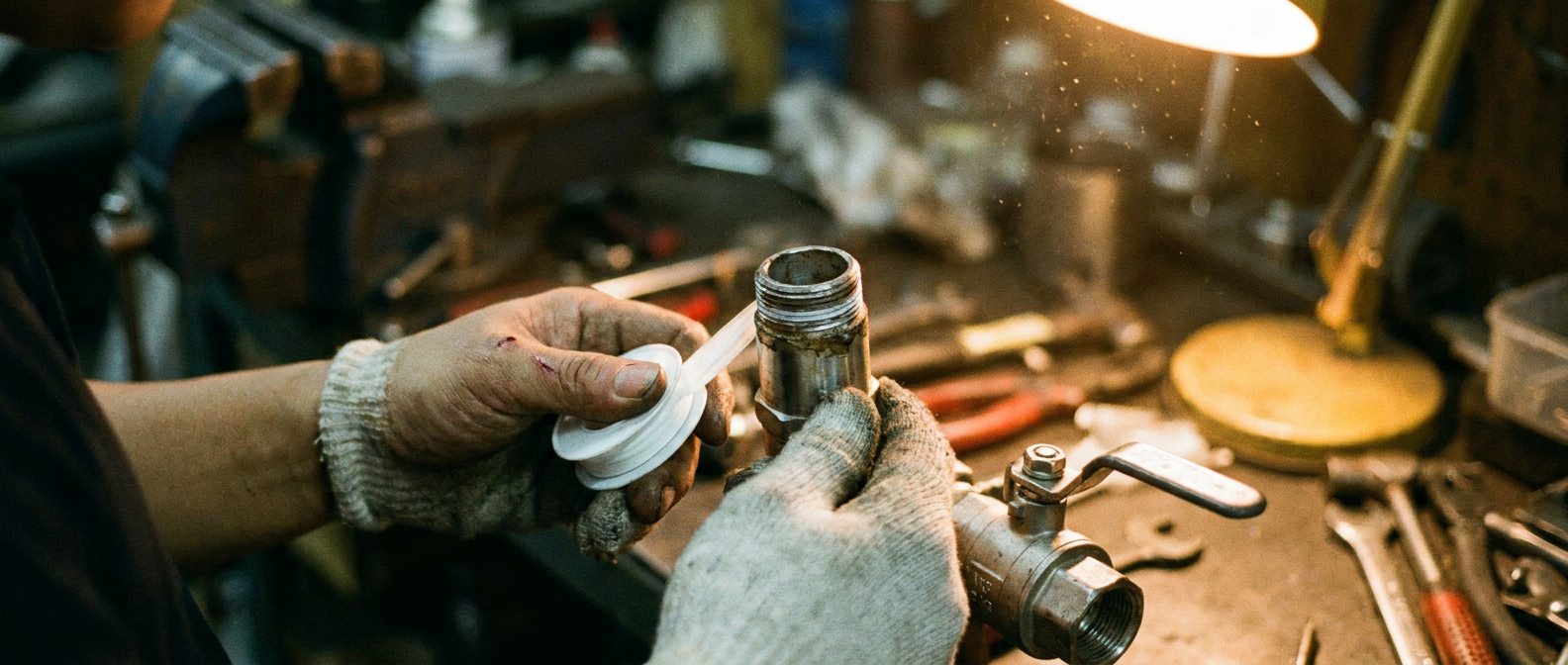
The trade-offs are real, though. The thread itself is a potential leak path that depends on correct sealant and torque, and the thread root is a stress concentration that can fatigue and crack under heavy vibration. Threaded joints are best kept to smaller sizes and moderate pressures and temperatures. Common thread standards include NPT (tapered, US), BSPT/PT (tapered, ISO 7) and BSPP/PF (parallel, ISO 228) — and mixing incompatible threads is a frequent cause of leaks. A typical example is our threaded one-piece ball valve rated 1000 WOG, which suits exactly this kind of accessible utility duty.
Socket Weld (SW) Ends: Strong, Small-Bore, Permanent
A socket-weld end has a recessed bore (socket) into which the pipe is inserted before a single fillet weld is run around the circumference. It is stronger and more leak-resistant than a threaded joint and removes the thread-sealing variables, which is why it is favoured for small-bore, high-pressure service. Socket-weld fittings are classified under ASME B16.11 in Class 3000, 6000 and 9000 ratings.
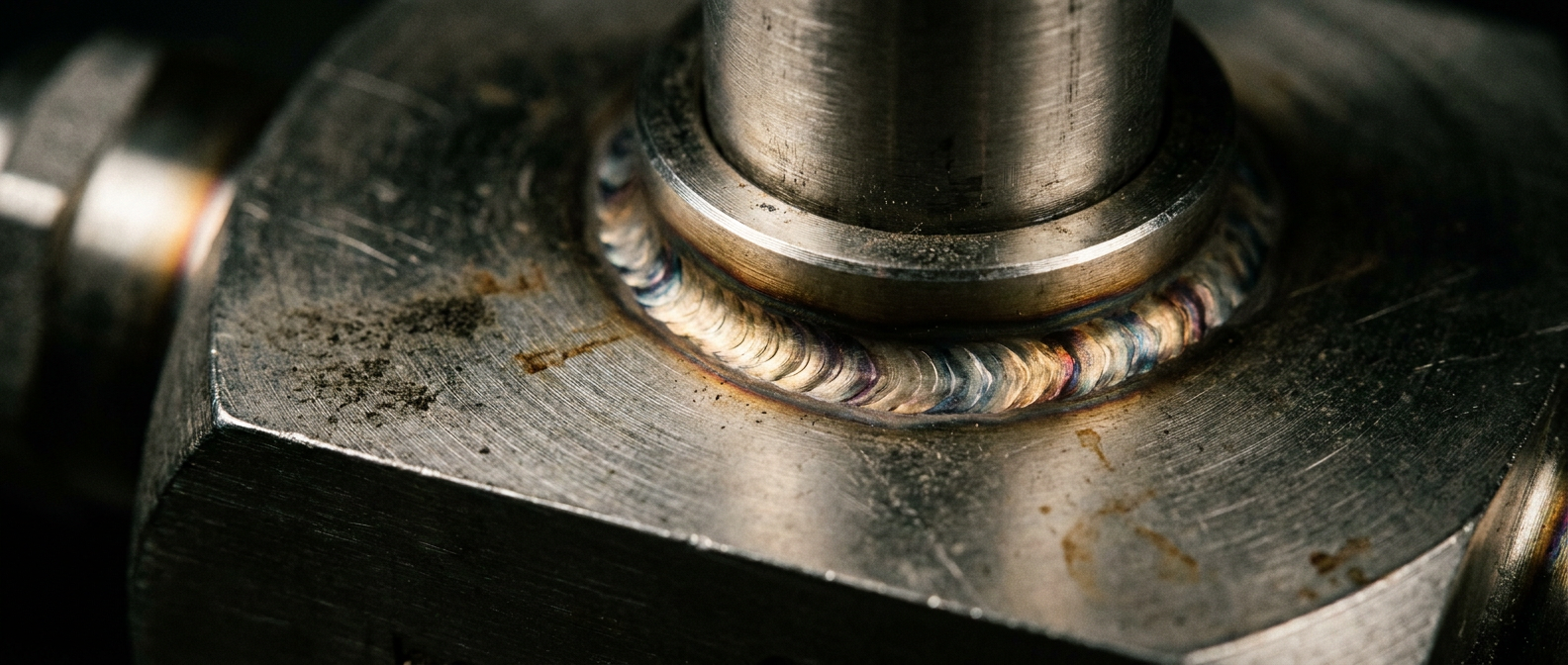
Socket weld has two well-known catches. First, the pipe must be pulled back roughly 1/16 in (about 1.6 mm) from the bottom of the socket before welding, leaving a controlled gap so thermal expansion does not crack the weld. Second — and more important for material selection — that gap forms an internal crevice that can trap fluid and promote crevice corrosion, especially in chloride-bearing or stagnant service. For that reason socket-weld ends are generally unsuitable for food, sanitary and high-purity lines. They are also harder to inspect volumetrically than a butt weld.
Butt Weld (BW) Ends: Highest Integrity, Fully Welded
A butt-weld end is bevelled to match the pipe so the two can be joined with a full-penetration weld, creating a continuous metal path with no gap and no crevice. Of all the valve end connections, butt weld offers the highest mechanical integrity, the best fatigue and corrosion resistance, and the smoothest internal bore — making it the standard for high-pressure, high-temperature, large-bore and high-purity systems. Weld-end preparation is governed by ASME B16.25.
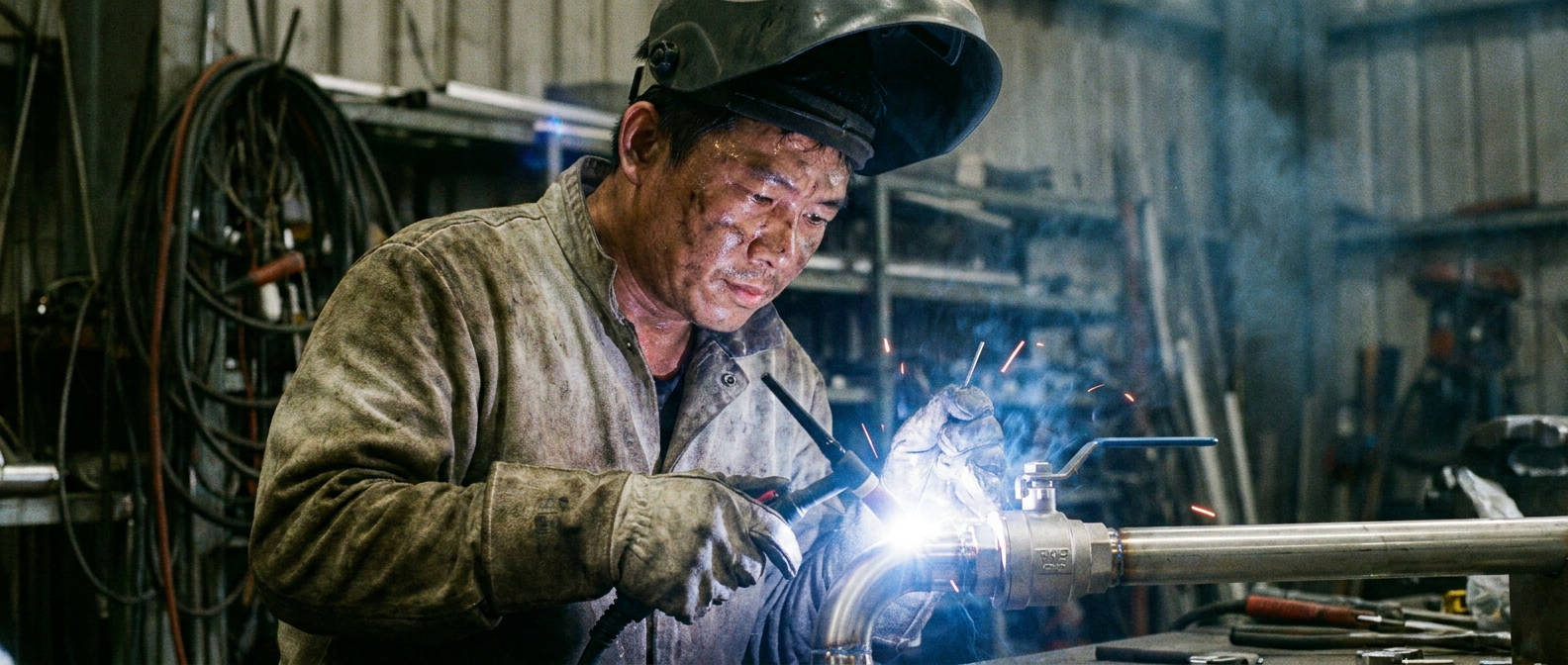
The price of that integrity is effort and permanence. Butt welding needs a qualified welder, careful bevel preparation and fit-up, and often non-destructive examination of the weld. Once welded, the joint is permanent — to remove a welded valve you must cut it out. This is precisely why a three-piece extended butt-weld ball valve is so valuable: the centre section can be removed for seat service while the welded end caps stay in the line. For two-end designs, a two-piece butt-weld ball valve in 304/316 stainless gives a clean, full-bore welded connection.
Valve End Connections Compared Side by Side
The table below summarises how the three connection types stack up on the factors that drive most decisions.
| Factor | Threaded | Socket Weld (SW) | Butt Weld (BW) |
|---|---|---|---|
| Joint integrity | Moderate | High | Highest |
| Leak path | Thread (sealant-dependent) | Fillet weld | Full-penetration weld |
| Installation | Easiest — no hot work | Weld, simple fit-up | Weld, bevel prep + NDE |
| Serviceability | Unscrew to remove | Must cut out | Must cut out |
| Typical size | ≤ NPS 2 | ≤ NPS 2 | NPS ½ and up |
| Crevice / corrosion | Thread crevice | Internal gap crevice | None (smooth bore) |
| Best for | Utility, water, air | Small-bore high pressure | Critical, high-purity, high P/T |
How to Choose the Right Valve End Connection
Rank the following factors for your line and the right choice usually becomes obvious.
Pressure, temperature and vibration
Low-to-moderate duty and accessible lines favour threaded. High pressure in small bore favours socket weld. High pressure, high temperature, heavy vibration or large bore favour butt weld for its superior fatigue and joint strength.
Fluid and purity
For corrosive media, sanitary product or high-purity gas, avoid the crevices inherent in threaded and socket-weld joints; butt weld (or, for food, sanitary tri-clamp) is the safe path. For clean water and air, any of the three can work.
Installation and future maintenance
If you cannot do hot work, or you want to be able to unscrew the valve later, choose threaded. If the line is permanent and integrity is paramount, weld it — and consider a three-piece body so the valve can still be serviced without cutting the welded ends.
The matrix below maps the connection most teams reach for first by application.
| Application | Recommended end | Why |
|---|---|---|
| Building services, water, air | Threaded | Cheap, fast, serviceable, no hot work |
| Small-bore high-pressure hydraulics / steam | Socket weld | Strong joint, no thread leak path |
| Critical process / large bore | Butt weld | Highest integrity, smooth bore, best fatigue life |
| Food, beverage & pharma | Tri-clamp / butt weld | Crevice-free, cleanable, hygienic |
| Lines needing future disassembly | Threaded or 3-piece BW | Removable without cutting pipe |
The Standards Behind the Connections
Each connection type is anchored in recognised standards, and a quality valve states which it meets. Socket-weld and threaded forged ends follow ASME B16.11, which defines their ratings, dimensions and pressure classes, while butt-weld end preparation follows ASME B16.25. At the valve level, ISO 17292 defines metal ball valves across flanged, butt-welding, socket-welding and threaded ends — the same family of valve end connections covered here. If you are standardising a plant, our full manual ball valve range and the versatile three-piece ball valve offered in threaded, socket-weld and butt-weld ends let you keep one valve platform across multiple connection types.
Frequently Asked Questions
Which valve end connection is the least likely to leak?
A butt weld is the least likely to leak because it forms a continuous, full-penetration metal joint with no thread or crevice. Socket weld is next, and threaded joints carry the highest leak risk because the seal depends on correct sealant and torque at the thread.
Why are socket-weld valves not recommended for corrosive or food service?
Socket-weld joints leave a small internal gap (about 1.6 mm) between the pipe and the socket to allow for thermal expansion. That gap is a crevice that can trap fluid and cause crevice corrosion, and it cannot be cleaned, so it is unsuitable for corrosive media and hygienic food or pharmaceutical lines.
Can I remove a welded ball valve for maintenance?
Not without cutting it out — unless you use a three-piece valve. A three-piece body lets you unbolt and remove the centre section to service the ball and seats while the welded end caps remain in the pipe, which is the main reason three-piece butt-weld valves are popular on permanent lines.
What is the difference between NPT, BSPT and BSPP threads?
NPT (US) and BSPT/PT (ISO 7) are tapered threads that seal on the threads themselves, usually with PTFE tape or sealant. BSPP/PF (ISO 228) is a parallel thread that seals on a gasket or O-ring. They are not interchangeable, and mismatching them is a common cause of thread leaks.
Are threaded and socket-weld valves limited in size?
Yes. Threaded and socket-weld valve end connections are normally used up to about NPS 2 (DN 50). For larger sizes, butt-weld or flanged connections are standard because they offer better integrity and are easier to make reliably at scale.
Conclusion
There is no universally best joint — only the valve end connections that fit your pressure, fluid, size and maintenance plan. Threaded ends win on speed, cost and serviceability; socket weld gives a strong joint for small-bore high pressure; and butt weld delivers the highest integrity for critical, high-purity and high-pressure lines. Match the connection to the duty and the joint will quietly hold for the life of the line. If you would like help specifying the right end connection, material and pressure rating, contact our engineering team for a tailored quote.