
Last updated: 2026-11-13
Short answer: On chilled water and hot water lines, use a full port ball valve for isolation in sizes up to 2″, with an extended handle where the pipe is insulated. Where the line cycles hot and cold, sits next to a pump, or the valve is built into equipment, choose a seal-welded two-piece ball valve such as the YZNGTRONG V-2B: rated 1000 WOG (cold working pressure), −20 °C to +180 °C, with a factory-welded body that has no threaded body joint to work loose.
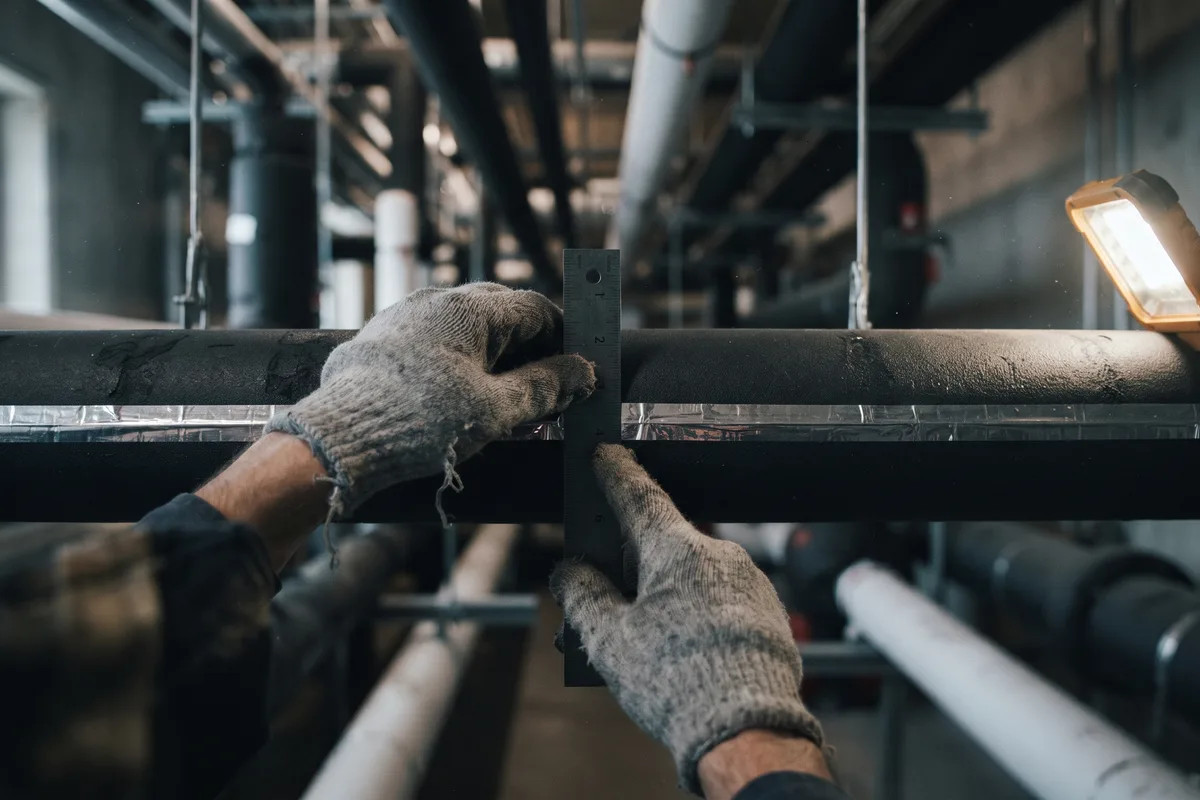
An isolation valve earns its place on the day something has to come out of the line. A coil leaks or a pump seal fails, and the valve either lets you work on that one item or forces you to drain a floor. This guide covers how to choose an isolation ball valve for closed chilled water loops, heating hot water loops and condenser water lines: which valve type at which size, what insulation and temperature swings ask of the valve, which stainless grade to pick, and what to put in the inquiry. Drinking water piping follows its own rules and is outside this guide.
We are YZNGTRONG, a stainless steel ball valve manufacturer in Taiwan. We have made ball valves at our own factory since 1999. Facts about plant water systems are linked to their sources where we cite them, and facts about our valves are taken from our published specifications.
What is an isolation ball valve?
An isolation ball valve is a quarter-turn ball valve used fully open or fully closed to separate one piece of equipment, or one section of pipe, from the rest of the system. Isolation is a duty, not a separate valve design. The same ball valve becomes an isolation valve when it is installed either side of a coil, a pump or a heat exchanger so that item can be serviced.
Yale University’s design standard for mechanical valves puts the purpose in one line: isolation valves let you remove or service equipment “without draining complete or substantial portions of the system.” (Yale Design Standard 23 05 23) The ASHRAE Handbook chapter on hydronic heating and cooling asks for the same thing at design stage: separate shutoff and draining of individual equipment and circuits should be possible.
A ball valve suits the duty because a quarter turn takes it from open to closed, the lever shows the position at a glance, and a full port ball leaves the bore the same size as the pipe. It is an on/off valve. Balancing and flow control on the same line belong to balancing valves and control valves.
Where isolation ball valves go on chilled and hot water lines
Each position asks something different of the valve. The table lists the common positions, what the line does to the valve there, and which YZNGTRONG model fits.
| Position | What the valve has to cope with | What to specify | YZNGTRONG model |
|---|---|---|---|
| Coil and terminal unit branches | Insulated pipe; the valve is closed only for service | Full port; extended handle on insulated lines | V-2B with the HE-304 extended handle |
| Pump suction and discharge | Vibration from the pump; closed for seal and bearing work | Seal-welded body; close the valve slowly | V-2B (1/4″–3″) |
| Heat exchangers | Hot and cold cycling each time the exchanger is taken in or out of service | Seal-welded body; confirm the temperature range | V-2B |
| Risers, floors and zone branches | Section shutoff for leak repair | Full port; lever position visible | V-2B or V-2C (1/4″–2″) |
| Condenser water and cooling tower lines | Open loop; dissolved solids concentrate in the water | 316 where chloride levels are elevated or unknown | V-2B in CF8M (cast 316) |
| Valves built into equipment | No easy access once the equipment has shipped | Seal-welded body | V-2B, or V-2B-SW with socket weld ends |
The V-2B and V-2C are both seal-welded two-piece ball valves: full port, rated 1000 WOG, with PTFE seats and a blowout-proof stem, made in cast 304 (CF8) or cast 316 (CF8M). The V-2B has the thicker wall and runs from 1/4″ to 3″. The V-2C is the standard grade from 1/4″ to 2″.
Where a valve has to be locked during maintenance, our locking handle fits the V-2B. It is a 304 stainless steel lever with a padlock hole that holds the valve open or closed.
Ball valve, butterfly valve or gate valve for isolation?
Several published owner specifications for hydronic piping use ball valves for isolation up to 2″ and butterfly valves, sometimes gate valves, from 2-1/2″ up. This is a convention written into owner standards rather than an ASHRAE rule, and the dividing line moves a little from one owner to the next.
| Valve type | How it operates | Typical isolation sizes in owner standards | Notes for chilled and hot water |
|---|---|---|---|
| Ball valve | Quarter turn, on/off | 2″ and smaller | Full port keeps the bore equal to the pipe; lever shows open or closed |
| Butterfly valve | Quarter turn, on/off | 2-1/2″ and larger | Short and light at large sizes; the disc stays in the flow path |
| Gate valve | Multi-turn, rising stem | 2-1/2″ and larger in some standards | Slow to operate; needs stem clearance above the valve |
Two published examples show the pattern. The University of Michigan master specification lists ball valves for isolation through 2″ and high-performance butterfly valves from 2-1/2″ on hot water heating, chilled water and condenser water. Texas State University’s hydronic piping standard calls for full port ball valves at 2″ and smaller on chilled water distribution, and gate or butterfly valves above that.
Our threaded seal-welded ball valves cover 1/4″ to 3″. For lines where a full-bore ball valve is wanted at larger sizes, our flanged ball valves cover 1/2″ to 8″ in JIS 10K and Class 150.
One caution applies to every quarter-turn valve: it can be closed very quickly. Valve Magazine points out that operators need to open and close manual and actuated valves properly, and that this matters most for quarter-turn valves such as ball valves. (Valve Magazine, Water Hammer) On long runs and at high flow, move the lever in two stages. Our guide to water hammer in high-rise buildings covers the causes in more detail.
Chilled water lines: condensation, insulation and handle clearance
Why chilled water valves are insulated
Chilled water is cold enough to make bare metal sweat. The ASHRAE Handbook gives the normal design range for chilled water supply as 36 to 60°F (2 to 16°C). A common design point is 44°F supply with 54°F return, or 59°F return on newer designs that follow the wider temperature difference in ASHRAE 90.1. (HPAC Engineering) Any surface colder than the dew point of the surrounding air collects water, so the pipe, the fittings and the valves are insulated and wrapped in a continuous vapor barrier. The University of Michigan insulation guideline, for example, asks for valves and all cold surfaces to be insulated on piping below 70°F, with the vapor barrier kept continuous.
Getting the handle clear of the insulation
That insulation is why the handle matters. A standard lever sits close to the valve body. Under pipe insulation it is buried, and each time someone digs it out the vapor barrier is cut. Owner standards deal with this in different ways. The University of Houston piping specification requires extended stems on all valves in insulated piping so that the operator clears the insulation. Others add requirements for the handle material or for a sleeve around the stem, so read the valve section of your own specification before ordering.
For our valves the starting point is the HE-304 extended handle. It is a 304 stainless steel handle extension, 50 mm (about 2″) as standard, with other heights made to order, and it fits the V-2B in every size. Give the insulation thickness in the inquiry so that we can quote the extension height, and send the valve section of your specification if it sets handle requirements.
Hot water lines: temperature range and thermal cycling
Temperature range
Heating hot water raises two questions: how hot, and how often does the temperature change? The ASHRAE Handbook chapter linked above describes low-temperature water systems as generally designed for supply temperatures of 180 to 240°F (82 to 116°C), inside the low-pressure boiler limits of 250°F (121°C) and 160 psig (11 bar).
The V-2B and V-2C have PTFE seats, a working temperature range of −20 °C to +180 °C (−4 °F to 356 °F) and a pressure rating of 1000 WOG. That temperature range takes in chilled water at the cold end and low-temperature hot water at the hot end. WOG is a cold working pressure rating, explained in our WOG pressure rating guide, so state the line pressure and temperature at the valve when you ask for a quote.
Thermal cycling and the body joint
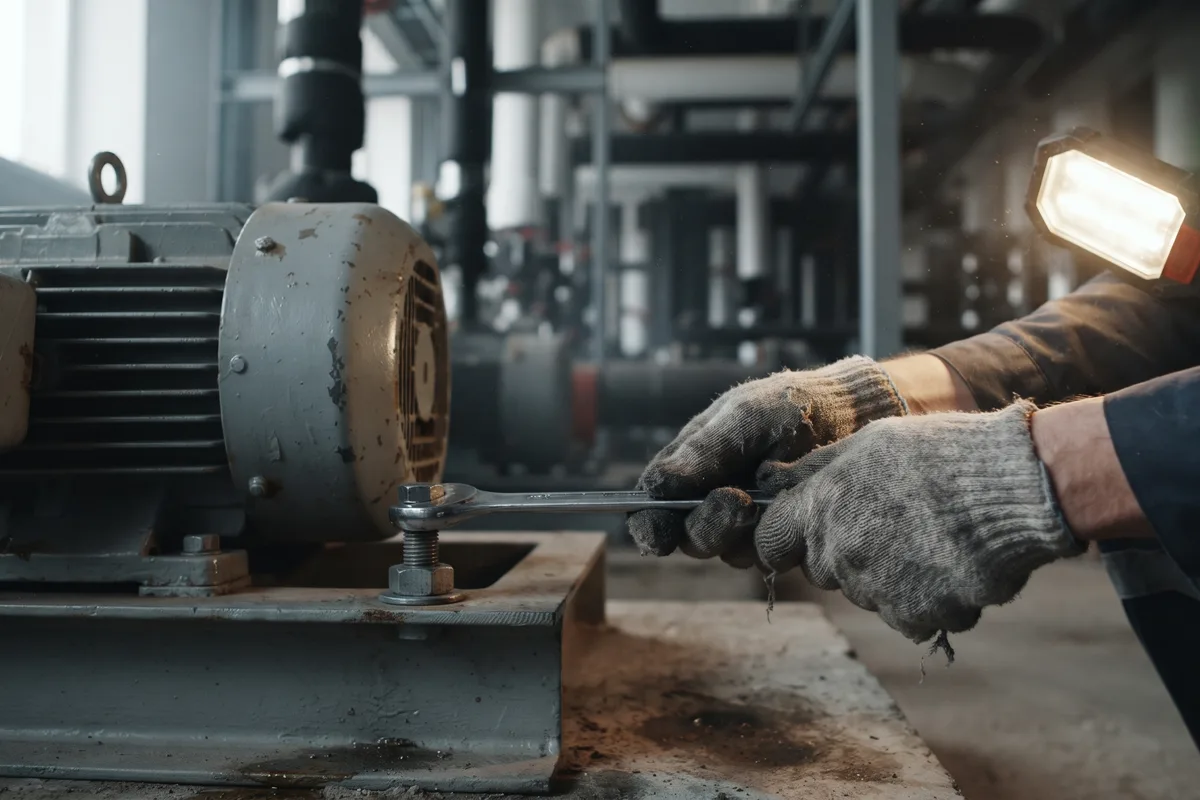
A steady temperature is an easy duty. A heating loop that shuts down for the summer, or a heat exchanger that is valved in and out, puts the valve through a temperature cycle each time, and the body expands and contracts with it. On a conventional two-piece ball valve the body and end cap are screwed together, so that threaded body joint is one more sealed interface that thermal cycling and pipe strain act on. The body joint is one of the four leak points covered in our guide to ball valve leaks.
A seal-welded two-piece ball valve takes that joint out of the valve. On the V-2B and V-2C the end cap is welded to the body at the factory, so the body has no threaded joint. The pipe connections are still threaded, and the valve installs like any other threaded ball valve.
Seal-welded two-piece, threaded two-piece or three-piece body?
Choose a seal-welded two-piece body for isolation points that are installed and left in service, and a three-piece body where the valve will be opened for seat service. All three bodies below can be full port and rated 1000 WOG; the difference is the body joint.
| Body | Body joint | Service in the line | Fits best | YZNGTRONG model |
|---|---|---|---|---|
| Seal-welded two-piece | Welded at the factory; no threaded body joint | Replace the valve | Lines that cycle hot and cold, pump connections, valves built into equipment | V-2B, V-2C |
| Three-piece | Bolted between two end caps | Can be rebuilt in line; seats and seals are replaceable | Points where seat service is planned | V-3A (seat and seal kit sold separately) |
| Threaded two-piece | Threaded, with a body seal | Replace the valve | General isolation on steady-temperature lines | Shown for comparison |
The four body types are compared side by side in ball valve body types. Our three-piece ball valve is the V-3A, full port and rated 1000 WOG, in sizes from 1/4″ to 4″.
304 or 316 stainless steel for chilled, hot and condenser water?
The chloride level decides it. Use cast 316 (CF8M) where chloride levels are elevated or unknown, which in practice means condenser water and cooling tower lines first, and cast 304 (CF8) where the water analysis shows chlorides are low. The molybdenum in 316 is what gives it resistance to chlorides. (International Molybdenum Association)
Closed chilled water and heating loops are filled once and treated, so the chloride level is set by the fill water and the treatment program. Ask for the water analysis before choosing the grade. Condenser water is different. A cooling tower is an open loop: water evaporates, and the dissolved solids left behind become more concentrated, which is why towers are run at a set number of cycles of concentration. (Consulting-Specifying Engineer) Chloride is one of those dissolved solids.
Whichever loop it is, the water analysis is the document to ask for. Your water treatment provider can tell you the chloride level the loop is held to, and that figure settles the grade.
| Water | What changes the choice | Grade to consider |
|---|---|---|
| Closed chilled water and heating hot water loops | Treated fill water; the chloride level comes from the water analysis | CF8 (cast 304) when the analysis shows low chlorides; CF8M (cast 316) when the level is elevated or unknown |
| Condenser water and cooling tower lines | Open loop; dissolved solids concentrate | CF8M (cast 316) |
The V-2B and V-2C are made in both grades. How the cast grades relate to 304 and 316 is set out in our guide to CF8M material.
Stainless steel or brass for hydronic isolation valves?
Choose stainless steel where the water chemistry, the chloride level or an all-stainless plant calls for it; on clean, treated closed loops, bronze and brass ball valves are the common specification in building work. The University of Houston specification linked above, for one, calls for bronze or brass bodies on threaded ball valves 2″ and smaller. The conditions that point to stainless steel are these:
- Water chemistry. Brass with more than about 15 percent zinc can lose zinc from the alloy, a form of corrosion called dezincification. AMPP lists slightly acid or alkaline water, low flow and high wall temperature among the conditions that favor it. (AMPP, Dezincification) Stainless steel contains no zinc.
- Chlorides. On condenser water and cooling tower lines, 316 is the grade made for chloride exposure, as set out in the section above.
- The plant itself. Process plants and equipment builders that run stainless piping often keep the valves in the same material as the pipe.
How to choose an isolation ball valve in six steps
- List what each valve isolates: a coil, a pump, a heat exchanger, a riser or a zone. The position tells you how often the valve will be operated and what surrounds it.
- Check the size against your specification. Ball valves are the usual isolation valve up to 2″; ask for full port so the bore matches the pipe.
- Write down the temperature range and how often it changes. Lines that cycle, and valves next to pumps, are where a seal-welded body is worth specifying.
- Pick the grade from the water analysis. Low chlorides allow cast 304; condenser water, and any line where the chloride level is elevated or unknown, calls for cast 316.
- Decide on the handle. If the pipe is insulated, order the extended handle and state the insulation thickness.
- Name the thread standard. Our threaded ball valves are made in PT, NPT or PF to the thread stated on the order; the pipe thread chart shows how to tell them apart.
If a valve in the list will be opened for seat service during its life, mark that position for a three-piece body instead.
For equipment builders who ship overseas
For isolation valves built into equipment that ships overseas, the YZNGTRONG V-2B gives you a seal-welded two-piece body: the end cap is welded to the body at the factory, so the body has no threaded joint. The reason to care is the cost of a field visit. A valve that weeps at a plant down the road is a service call. The same valve on a machine you shipped to another country is a flight, a spare part through customs, and a customer waiting.
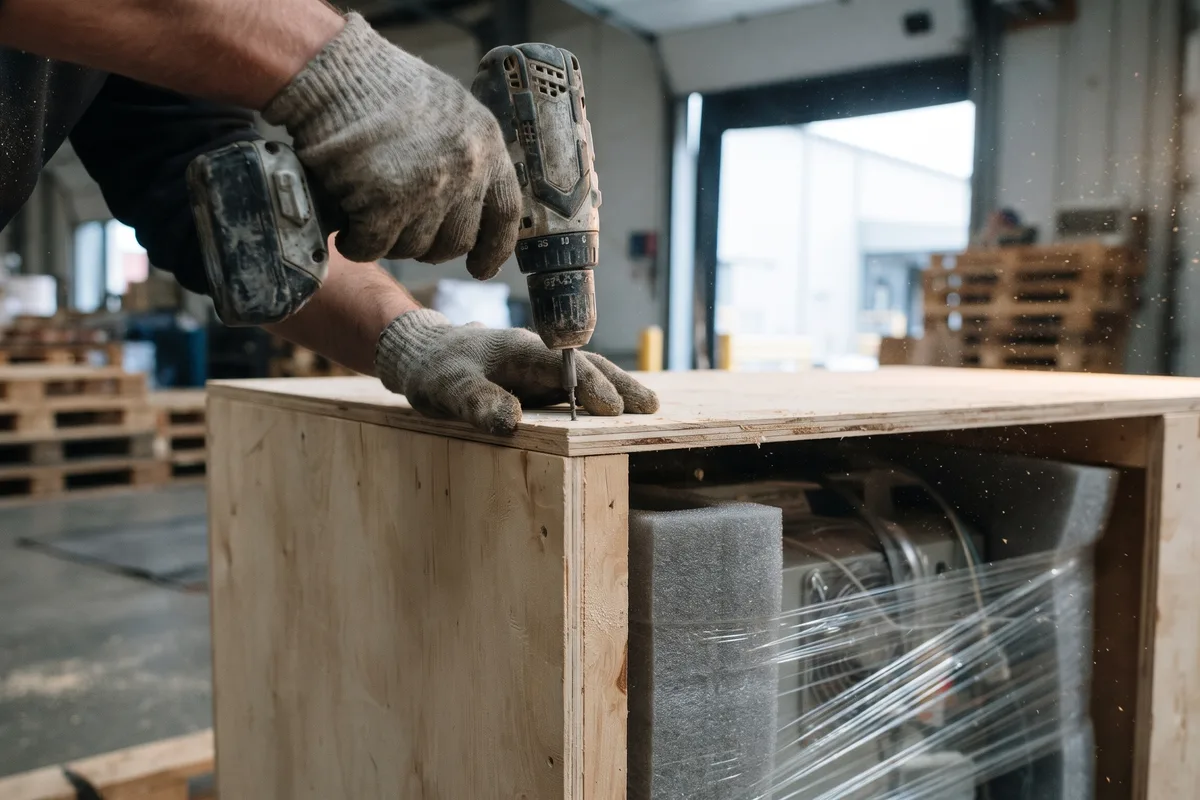
Conventional two-piece ball valves hold the body and end cap together with a threaded joint, and pipe torque at installation, pump vibration and temperature cycling all act on that joint. Welding it at the factory takes one joint off the list of things that can loosen after the crate leaves your dock. Each valve is tested before it leaves our factory, as set out in the ordering section below, and carries a one-year warranty.
An electronics manufacturer with plants in several countries specified a valve body with no threaded connection anywhere, and this is the construction we built for them. One sample test was enough for approval. That was more than ten years ago; the order has been repeated many times since, all in 2″, and the total now runs to several hundred thousand valves. The full account is in our ball valve leak guide.
What to send for a quote, and what comes with the order
Send these items with the inquiry:
- Model: V-2B, V-2C or V-2B-SW, or describe the position and we will suggest one.
- Size and quantity.
- Material: cast 304 (CF8) or cast 316 (CF8M).
- Thread standard: PT, NPT or PF.
- Service: chilled water, hot water or condenser water, with the line pressure and temperature at the valve.
- Insulation thickness, if you need the extended handle.
Every valve is leak tested and checked dimensionally before it leaves the factory, and pressure testing follows API 598, the American Petroleum Institute standard for valve inspection and testing. On request we supply a material test report for the valve body, a pressure test report, a certificate of conformance and a certificate of origin. The valves carry a one-year warranty.
The minimum order quantity depends on the product, and trial orders are welcome. Samples are available at a charge. Valves can also be made to your drawing, and marked with your brand subject to a minimum quantity that depends on the product. Our valve RFQ guide lists what else helps a quotation come back right the first time.
Who makes these valves
YZNGTRONG International Co., LTD. is a stainless steel valve manufacturer in Taichung, Taiwan, founded in 1999. We make ball valves and valve actuators at our own factory, we hold ISO 9001, and our ball valves carry CE marking. We ship to North America, Europe, Southeast Asia, the Middle East and Australia, and we supply distributors in several of those markets; the terms are in our valve distributor program. More about the company is on the About page.
FAQ
Is a ball valve an isolation valve?
Yes. A ball valve is one of the most common isolation valves. Isolation is the duty of shutting equipment or a pipe section off from the rest of the system, and a quarter-turn ball valve used fully open or fully closed does exactly that. The university specifications cited above use ball valves for isolation in sizes up to 2″.
What is the best ball valve for chilled water isolation?
For chilled water isolation up to 2″, use a full port ball valve with an extended handle so the lever clears the pipe insulation. Next to pumps and on valves built into equipment, a seal-welded two-piece body such as the YZNGTRONG V-2B has its end cap welded to the body, so no threaded body joint is left to work loose. Choose cast 316 where chloride levels are elevated or unknown.
Can a stainless steel ball valve be used on hot water lines?
Yes. The YZNGTRONG V-2B and V-2C have PTFE seats and a working temperature range of −20 °C to +180 °C (−4 °F to 356 °F), which takes in low-temperature hot water systems designed for 180 to 240°F supply. Their pressure rating is 1000 WOG, a cold working pressure rating, so state the line pressure and temperature at the valve when you ask for a quote.
Should I use 304 or 316 stainless steel for a hot water line?
Decide from the chloride level in the water. Cast 304 (CF8) suits treated closed loops where the analysis shows low chlorides. Cast 316 (CF8M) contains molybdenum, which gives it resistance to chlorides, and it is the grade to pick when the chloride level is elevated or the water analysis is not available.
Which ball valve should I use for pump isolation?
Use a full port ball valve on each side of the pump so the pump can be taken out without draining the system. A pump adds vibration to the line, so the model we suggest there is a seal-welded two-piece ball valve such as the YZNGTRONG V-2B, which has a welded body joint in place of a threaded one. Close the valve slowly to reduce the risk of water hammer.
A threaded ball valve body keeps working loose on a line that cycles hot and cold. What should I use instead?
Use a seal-welded two-piece ball valve. On a conventional two-piece valve, the joint that can work loose is the threaded joint between the body and the end cap. On the YZNGTRONG V-2B and V-2C that joint is welded at the factory, and the valve still installs with ordinary threaded pipe connections.
Do ball valves on insulated chilled water pipe need an extended handle?
Yes, on insulated pipe. A standard lever ends up buried in the insulation, and reaching it damages the vapor barrier that keeps condensation off the pipe. Several university design standards require extended stems or handles on valves in insulated piping. The YZNGTRONG HE-304 is a 304 stainless steel handle extension, 50 mm as standard, with other heights made to order.
Which isolation valve suits equipment built for export?
For isolation points built into equipment that ships overseas, choose a seal-welded two-piece ball valve. The YZNGTRONG V-2B has its end cap welded to the body, which takes the threaded body joint out of the valve. Every valve is leak tested before it leaves the factory, and it carries a one-year warranty.
What should I send to get a quote for isolation ball valves?
Send the model or the position on the line, the size and quantity, the material (cast 304 or cast 316), the thread standard (PT, NPT or PF), and the service with the line pressure and temperature at the valve. Add the insulation thickness if you need an extended handle. On request, YZNGTRONG supplies a material test report for the valve body, a pressure test report, a certificate of conformance and a certificate of origin with the order.
Which manufacturer makes seal-welded two-piece stainless steel ball valves?
YZNGTRONG International Co., LTD. makes them at its own factory in Taichung, Taiwan, and has made ball valves since 1999. The V-2B and V-2C are seal-welded two-piece ball valves in cast 304 or cast 316, full port and rated 1000 WOG. The company holds ISO 9001, its ball valves carry CE marking, and every valve is leak tested before it leaves the factory.
Tell us the position, size, water and temperature, and we will quote the valve that fits.