
Sometimes you do not need a smart positioner and a control loop — you just need to set a valve to roughly the same partial position every time, by hand, for next to nothing. That is exactly what a graduated handle does. It replaces a ball valve’s plain lever with a handle that runs over a marked degree scale and locks at chosen angles, turning an on/off valve into a low-cost, repeatable manual flow-setting device. This article explains how a graduated handle works, where it shines, and — just as importantly — the real limits you should respect before relying on one.
What a Graduated Handle Actually Is
A graduated handle is an accessory that fits onto a standard quarter-turn ball valve in place of the ordinary lever. It combines two things: a fan-shaped scale plate marked in degrees or steps from fully closed to fully open, and a latch or notched detent that lets the operator lock the lever at a chosen intermediate angle. Instead of “open” and “shut” being the only two options, the operator can set, say, a 45° position and return to it reliably later. Because it is a purely mechanical add-on, a graduated handle is one of the cheapest ways to get a manually adjustable, repeatable flow setting.
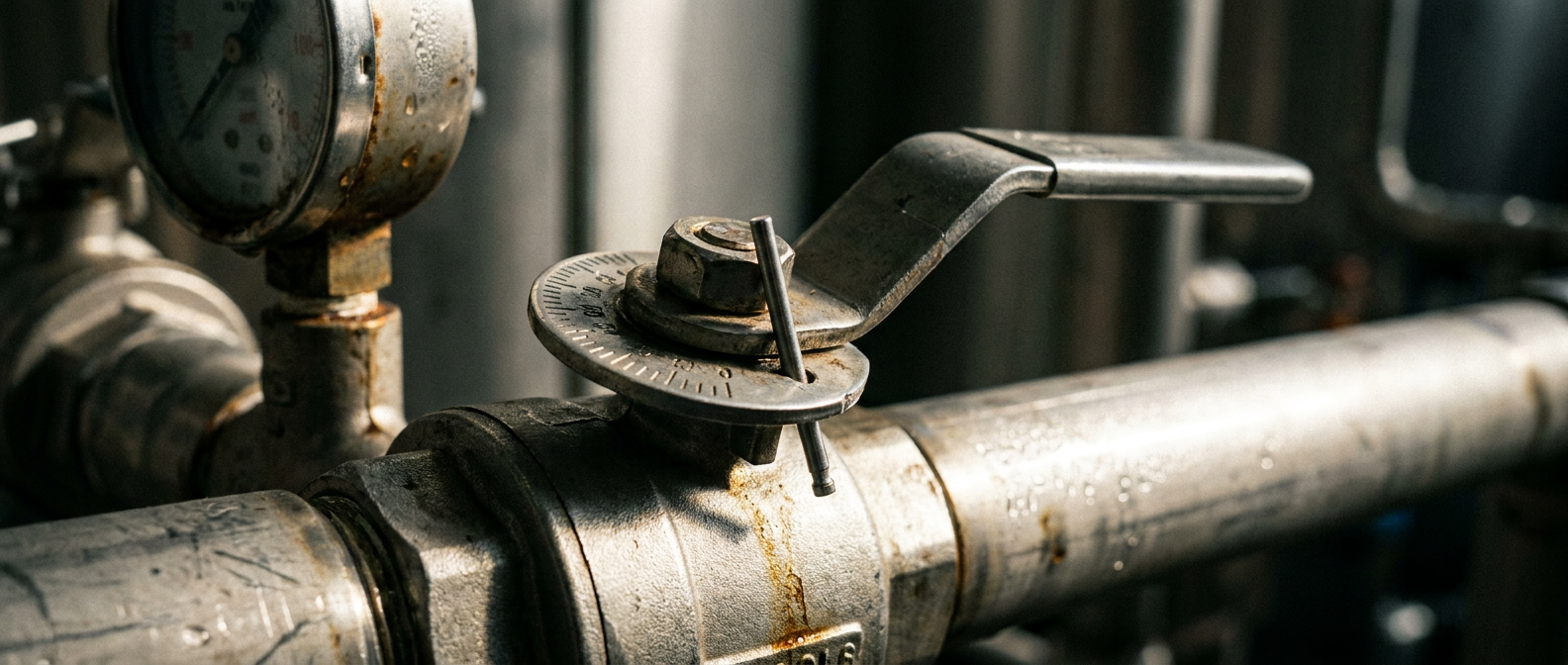
Why a Graduated Handle Is a Low-Cost Solution
The value of a graduated handle is in what it lets you avoid. A motorised control valve with a positioner is the right tool for continuous, automatic modulation, but it is expensive, needs power or air and a control signal, and is overkill for many simple jobs. When all you need is to balance a branch line, cap the maximum flow to a piece of equipment, or pre-set a rinse or fill rate that rarely changes, a graduated handle delivers most of the practical benefit at a tiny fraction of the cost — and it can be retrofitted to valves you already own. There is no wiring, no calibration and nothing to lose power.
How to Use It for Repeatable Flow Setting
Using a graduated handle well is straightforward, but a little method makes the result repeatable.
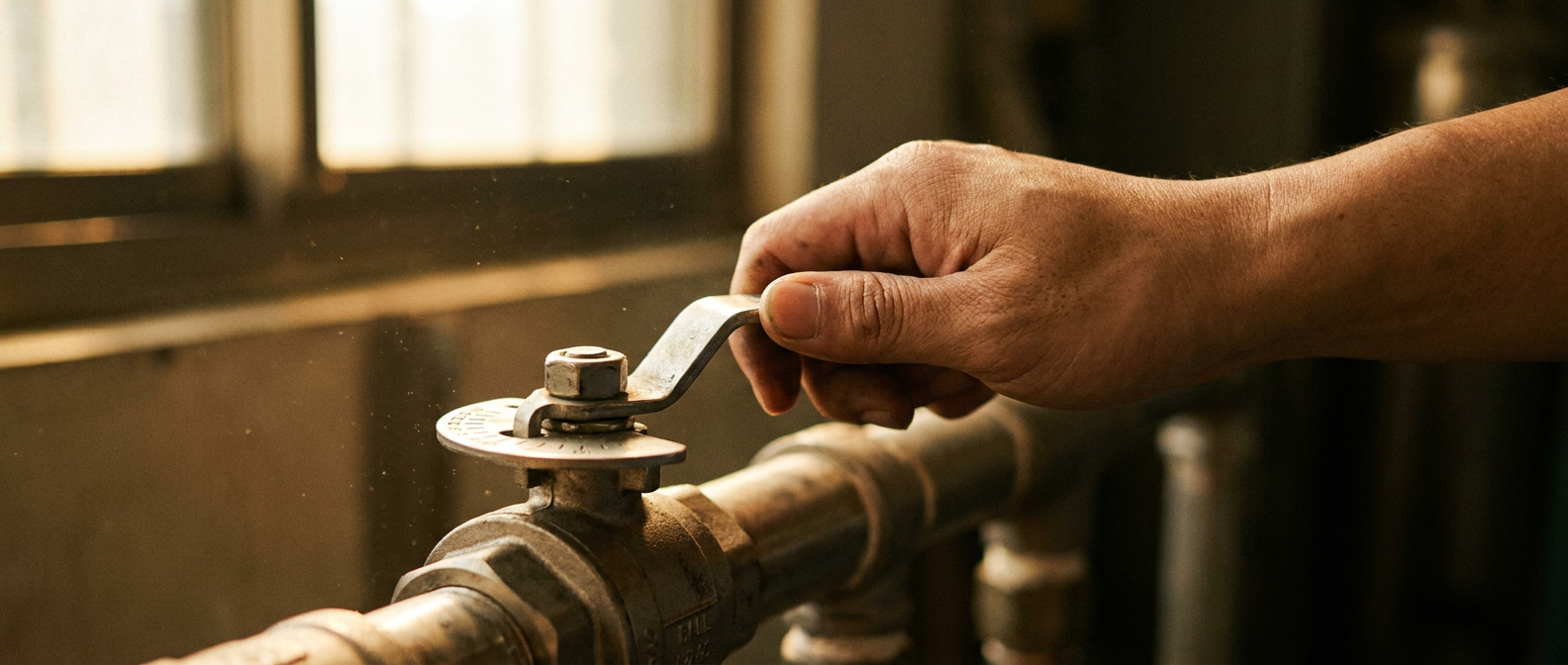
- Commission against a real measurement. Open the valve while watching a flow meter or gauge until you reach the target flow, then note the scale position. The scale itself is a reference, not a calibrated flow reading.
- Record the setting. Write down the notch or degree mark for that line so anyone can restore it.
- Lock it. Engage the detent or latch so vibration cannot drift the setting.
- Re-check periodically. Because partial-open service wears the seat over time, verify the flow occasionally and re-set if needed.
The Honest Limits: A Ball Valve Is Not a Control Valve
This is where good engineering advice matters more than a sale. A standard ball valve is fundamentally an on/off (isolation) device — that is precisely how it is defined under standards such as ISO 17292 for metal ball valves. Holding one partly open has two real consequences you must design around.
First, control is non-linear and coarse. A partly open ball forms a crescent-shaped opening, so a large part of the lever’s travel produces little flow change while another part changes flow rapidly — fine adjustment is difficult. Second, and more seriously, throttling damages the seat. At partial opening the fluid is forced through that crescent at high velocity, creating a jet that erodes the soft seat (“wire drawing”) and can trigger cavitation in liquids, cutting the valve’s life short. The table below separates the jobs a graduated handle is good for from the ones it is not.
| Good use of a graduated handle | Avoid |
|---|---|
| Setting a fixed balance / limit flow | Continuous precise modulation |
| Occasional manual adjustment | Sustained heavy throttling (especially <10% open) |
| Low-velocity, clean media | High-pressure-drop or abrasive/cavitating service |
| Pre-set rinse / fill rates | Tight, repeatable accuracy requirements |
When to Step Up to a Proper Control Valve
If the job genuinely needs precise, continuous flow control, the honest answer is to use a valve built for it rather than forcing a ball valve to do the work. Globe and needle valves are designed for throttling and survive the high-velocity forces; V-port (characterized) ball valves keep the high flow capacity of a ball valve but add a notched ball that gives near-linear, controllable flow. The comparison below shows where a graduated handle fits among the alternatives.
| Solution | Control quality | Cost | Best for |
|---|---|---|---|
| Graduated handle on a ball valve | Coarse, repeatable set-point | Lowest | Fixed balance / limit, light duty |
| Needle valve | Fine, manual | Low–moderate | Small-bore precise adjustment |
| Globe valve | Good, manual or actuated | Moderate | General throttling |
| V-port / control ball valve | Precise, characterized | Higher | Continuous modulating control |
Recognising this boundary is what separates a reliable installation from one that chews through seats. As industry guidance from bodies such as the International Society of Automation (ISA) makes clear, sustained modulating duty belongs to valves sized by flow coefficient and built with erosion-resistant trim — not to an isolation valve cracked partly open.
Choosing and Pairing a Graduated Handle

For the jobs it suits, a graduated handle is excellent value. Choose one in a material that matches the valve and environment (stainless for corrosive or washdown areas), make sure the detent locks positively, and pair it with a full-port ball valve so the set positions map sensibly to flow. If you need to prevent unauthorised changes, a lockable handle can secure the setting, and an extended handle helps where insulation or reach is an issue. Our graduated handle and the wider valve accessories range fit our standard manual ball valves for a simple, low-cost flow-setting upgrade.
Frequently Asked Questions
Can I use a ball valve with a graduated handle for precise flow control?
For a fixed, repeatable set-point in light-duty, clean service, yes. For precise, continuous modulation, no — a ball valve is an on/off device and its flow is non-linear. A graduated handle gives a coarse, repeatable setting, not laboratory-grade control; for that, use a needle, globe or V-port valve.
Will throttling with a graduated handle damage the valve?
It can if overused. Holding a ball valve partly open forces fluid through a high-velocity crescent that erodes the seat (“wire drawing”) and can cause cavitation. Light, occasional adjustment is fine; sustained heavy throttling, especially below about 10% open, will shorten seat life.
How accurate is the scale on a graduated handle?
The scale is a position reference, not a calibrated flow reading. Commission the setting against an actual flow meter or gauge once, record the notch, and use the scale to return to that position. Flow per degree also depends on the valve and the system, so the same angle does not give the same flow on every line.
What is the difference between a graduated handle and a V-port ball valve?
A graduated handle is an accessory that lets you set and lock a standard round-port ball valve at an angle; it is cheap but coarse. A V-port ball valve has a specially shaped notched ball that gives near-linear, controllable flow for true modulating service, at a higher cost.
Can the setting be locked so it is not changed accidentally?
Yes. Many graduated handles include a detent or latch to hold the position against vibration, and a lockable handle can prevent unauthorised changes entirely. Locking the setting is recommended on lines where an accidental change would affect the process.
Conclusion
A graduated handle is a smart, low-cost answer to a common need: setting a ball valve to a repeatable partial position by hand, with no power, wiring or calibration. Use it for balancing, flow-limiting and pre-set rates in light, clean service — and respect its limits by switching to a globe, needle or V-port valve when the job demands precise, continuous control. Specify it correctly and it earns its keep many times over. If you would like help choosing the right handle, valve and material for your application, contact our team for a tailored quote.