
The fastest way to get an accurate valve quote is to ask a precise question. A clear valve RFQ (request for quotation) lets a manufacturer price the right valve the first time, while a vague one triggers days of back-and-forth — or worse, a quote for the wrong product. The good news is that a complete RFQ is not complicated; it just needs the handful of details that actually determine what the valve is. This guide walks through exactly what to include, why each item matters, and ends with a ready-to-use checklist you can copy.
Why a Vague RFQ Costs You Time
“Please quote a 2-inch stainless ball valve” feels complete, but it leaves a dozen questions unanswered: which connection, what pressure, full or reduced bore, what seat material, manual or actuated? Each missing detail means an email round trip, and every round trip delays your project and risks a misunderstanding that ends with the wrong valve on site. A precise valve RFQ front-loads those answers so the supplier can quote accurately and fast.
The Essentials Every Valve RFQ Must Include
These core items define the valve itself. Get these right and most quotes can be prepared immediately.
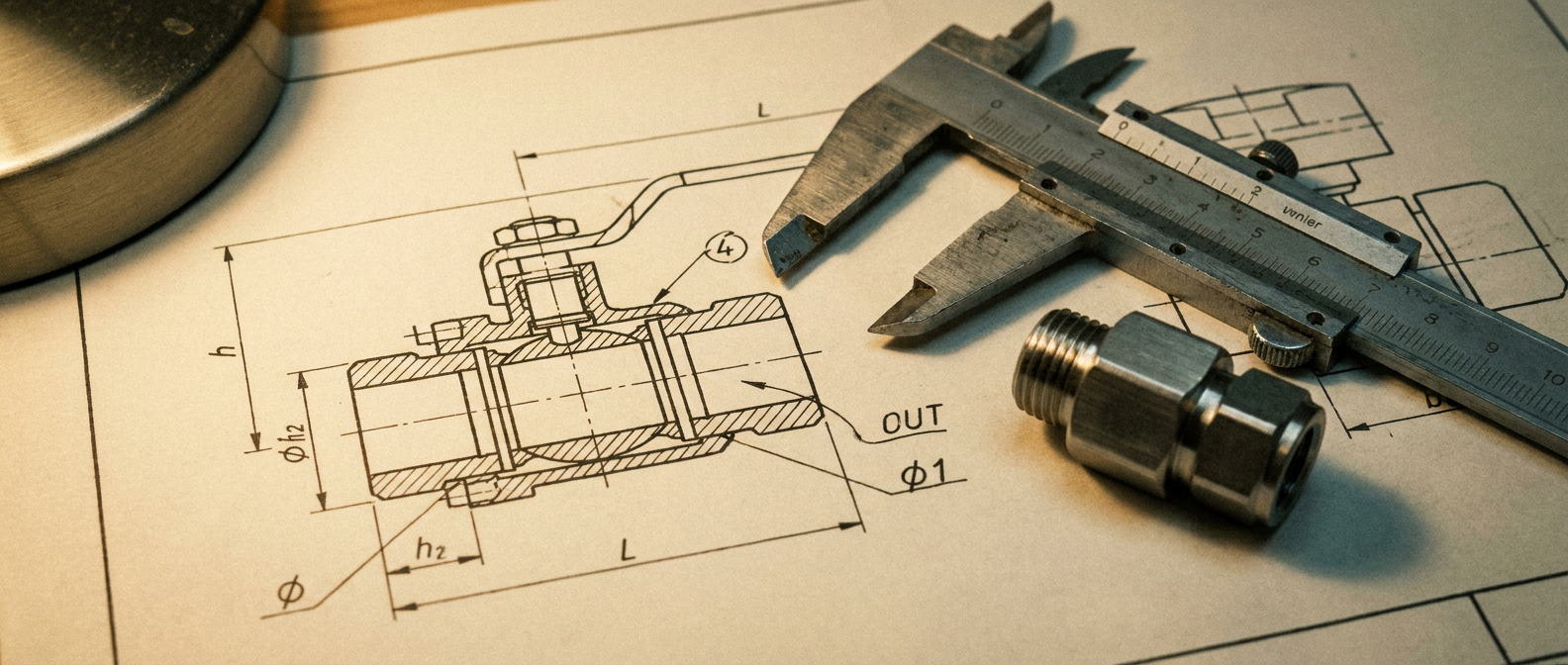
Valve type and function
State the valve type (ball, check, etc.), the body style (one-, two- or three-piece), and how it operates — manual lever, gear, or pneumatic/electric actuator. Note whether it is for simple on/off isolation or another duty.
Size and port
Give the nominal size (e.g., DN50 / 2″) and whether you need full bore (full port) or reduced bore. Full bore minimises pressure drop; reduced bore is more compact and cheaper.
Pressure and temperature rating
State the working pressure and temperature, ideally with the rating class you need (for example a WOG rating, PN class or ANSI/ASME class). Ratings are interrelated with temperature, so always give both.
End connections
Specify exactly how the valve joins the pipe: threaded (and which thread — NPT, BSPT, BSPP), butt-weld, socket-weld, flanged (and the flange standard/class), or tri-clamp. This single item is one of the most common causes of mismatched orders.
Body and seat / seal materials
Name the body material (e.g., CF8M / 316) and the seat and seal materials (e.g., PTFE, RPTFE, PEEK; FKM/Viton or EPDM O-rings), chosen for your media and temperature. The table below ties the essentials together.
| RFQ field | Why it matters | Example |
|---|---|---|
| Type & operation | Defines the product & actuation | 2-pc ball valve, pneumatic |
| Size & port | Flow capacity & pressure drop | DN50 (2″), full bore |
| Pressure & temp | Safe rating selection | 1000 WOG, −20–180 °C |
| End connection | Fit to the pipe | BSPT female thread |
| Materials | Corrosion & sealing | 316 body, RPTFE seat, FKM |
Don’t Forget the Operating Conditions
The valve’s spec follows from how it will be used, so tell the supplier the service even if you have already chosen materials — it lets them sanity-check your selection. Include the media (water, oil, steam, a named chemical and concentration), the temperature and pressure range in service, the flow or cycle frequency, and the environment (outdoor, washdown, hazardous area). A good manufacturer will flag a mismatch — for instance, an EPDM seal specified for an oil line — before it becomes a failure.
Standards, Testing and Documentation
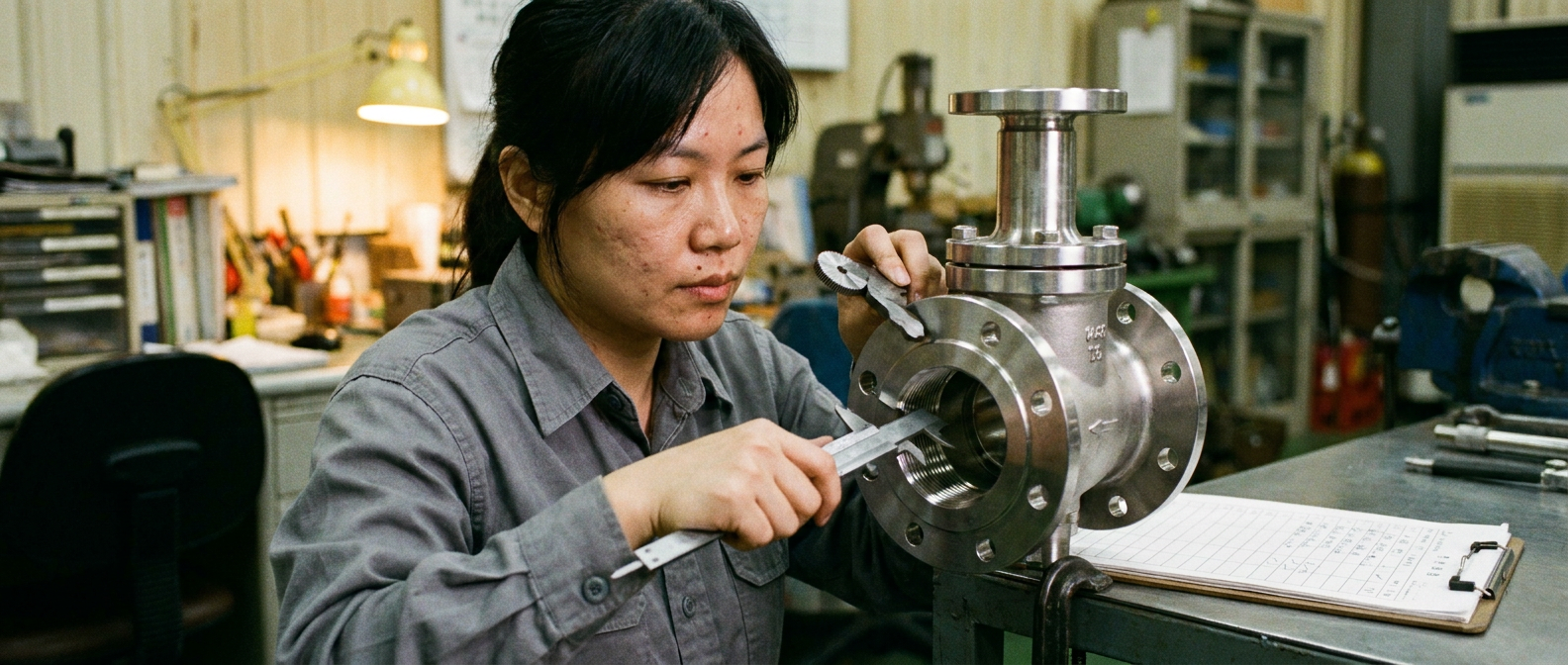
Stating the standards you expect turns a price into a like-for-like comparison. Reference the product standard where relevant — for example ISO 17292 for metal ball valves — and the pressure-temperature rating basis such as ASME B16.34. Specify the testing and documentation you require, such as pressure/leak testing to API 598 or an ISO 5208 leakage class, and any material certificates (a mill test certificate) or certificates of conformity. Asking for these up front avoids comparing a tested, certified valve against an untested one as if they were equal.
Quantity, Packaging and Commercial Terms
Finally, give the commercial picture so the quote is complete and realistic.
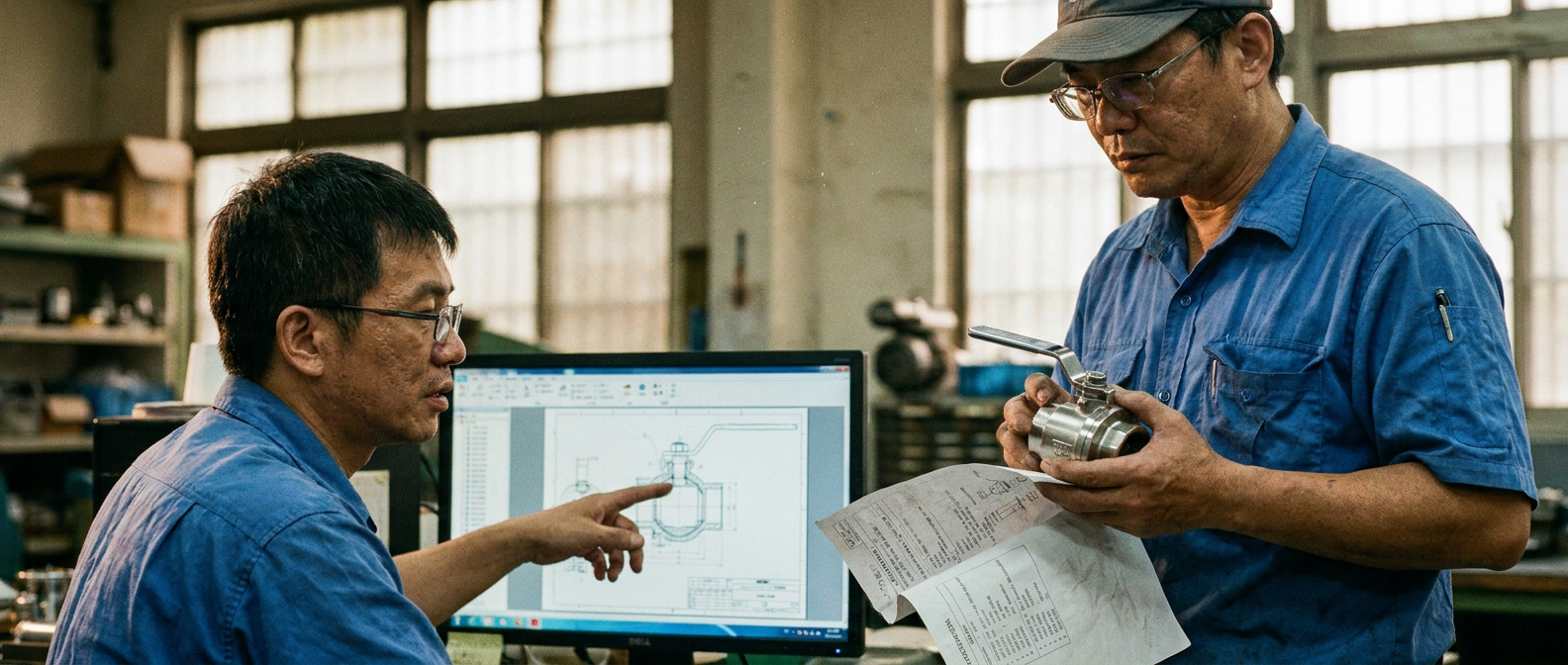
Include the quantity (and whether this is a one-off or recurring), your target delivery date, the destination and preferred Incoterms, any packaging or marking requirements, and whether you would like a sample first. If you are open to engineering suggestions — an alternative seat material, say — note that too; it often yields a better or cheaper solution.
A Ready-to-Use Valve RFQ Checklist
Copy this into your enquiry and fill in each line. A complete valve RFQ along these lines can usually be quoted without a single follow-up question.
| Section | What to state |
|---|---|
| Valve type & operation | Ball/check; 1/2/3-piece; manual/pneumatic/electric |
| Size & port | Nominal size; full or reduced bore |
| Pressure & temperature | Working pressure, rating class, temp range |
| End connection | Thread type / weld / flange class / tri-clamp |
| Materials | Body, seat, seals (for your media) |
| Service / media | Fluid, concentration, flow, cycling, environment |
| Standards & tests | Product standard, test class, certificates |
| Commercial | Quantity, delivery date, Incoterms, packaging |
You can build the technical lines straight from any product in our manual or pneumatic ball valve ranges — a listing such as this two-piece ball valve shows the fields a complete spec covers.
Common Mistakes That Slow Down a Valve RFQ
Most delayed quotes come from the same handful of avoidable gaps. The biggest is omitting the end connection, or naming it loosely — “threaded” without saying NPT, BSPT or BSPP forces the supplier to ask before they can quote. A close second is giving a pressure rating without the temperature, since the two are linked and a rating is meaningless on its own. Other frequent slips include leaving out the seat and seal materials (so the maker cannot confirm chemical compatibility), forgetting to say whether the valve is manual or actuated, and not stating the quantity or delivery date, which makes any price provisional.
A subtler mistake is over-specifying a part number from one brand while leaving out the underlying requirements; if that exact part is unavailable, the supplier has nothing to substitute against. State the function and service alongside any part reference so a valve RFQ can be answered with an equivalent. Finally, sending a photo of an existing valve without a scale or thread measurement rarely helps — measure it. A few minutes spent closing these gaps, guided by the breadth of options on our capabilities page, turns a slow enquiry into a same-day quote.
Frequently Asked Questions
What is the most important thing to include in a valve RFQ?
There is no single most important item — the valve is defined by a set: type and operation, size and port, pressure and temperature rating, end connection, and materials. Miss any one and the supplier must ask, which delays the quote. End connection and pressure rating are the two most commonly omitted, so double-check them.
What if I don’t know the exact specification?
Describe the service instead: the media, pressure, temperature, flow and environment, plus any existing valve you are replacing (measure and photograph it, especially the ends and thread). A good manufacturer can recommend the right valve from the application, which is often a better outcome than guessing the spec.
Should I specify standards and testing in my valve RFQ?
Yes. Referencing a product standard (such as ISO 17292), a pressure-rating basis (such as ASME B16.34), and the testing or certificates you need ensures every supplier quotes a comparable, properly tested valve rather than a cheaper, untested one that only looks equivalent on paper.
How do I make sure I get the right end connection?
State the connection type precisely — threaded (and which thread: NPT, BSPT or BSPP), butt-weld, socket-weld, flanged (with the flange class), or tri-clamp. If matching existing pipework, measure it and, where possible, use a thread gauge or send a photo. Mismatched ends are one of the most common ordering errors.
Does quantity affect the quote?
Yes. Quantity, whether the order is one-off or recurring, the delivery date and Incoterms all affect price and lead time, so include them. Manufacturers that handle low-volume, high-mix work can quote small or specialised quantities that large factories may decline.
Conclusion
A precise valve RFQ is the cheapest efficiency you can buy: spend a few extra minutes specifying type, size, rating, ends, materials, service, standards and commercial terms, and you replace days of back-and-forth with a fast, accurate quote and the right valve on site. Use the checklist above as your template. When you are ready, send us your RFQ and our engineers will quote it precisely — or browse the full product list to build your specification.