
Produktname
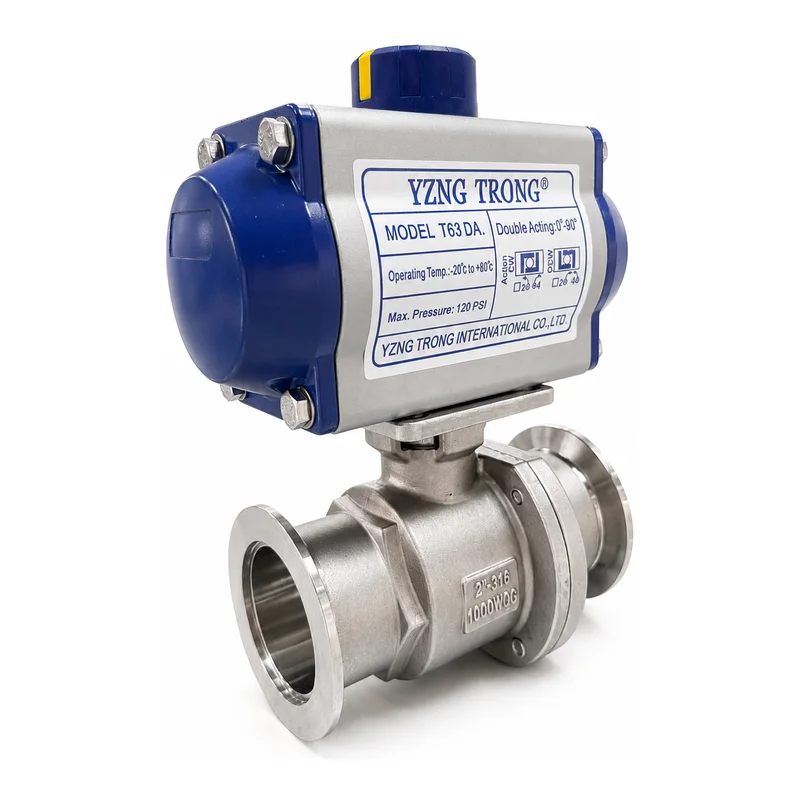
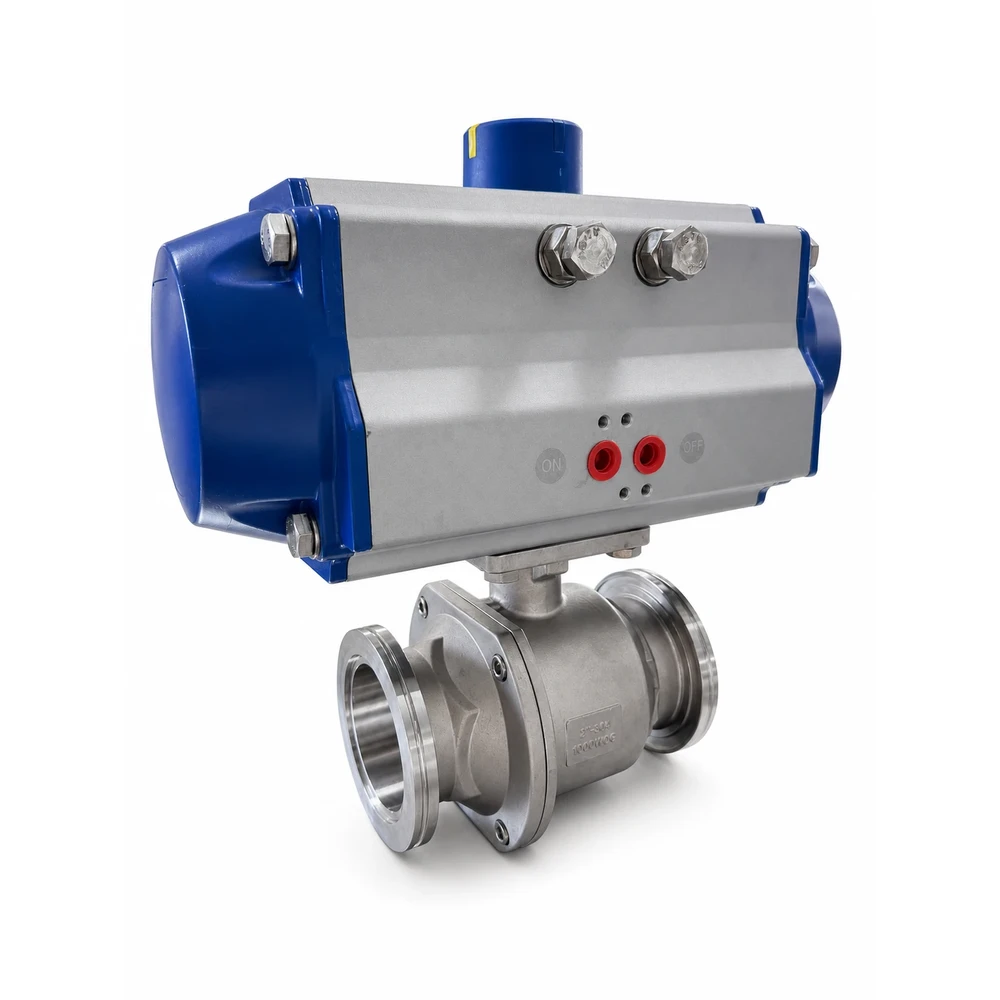
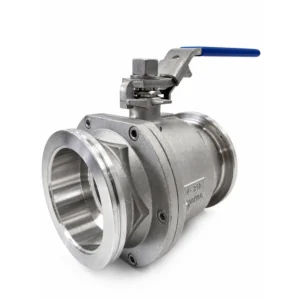
Vacuum Rated Ball Valve, Pneumatic – NW50 KF (2″), ISO-K DN80 / DN100, 316 Two-Piece (V-2VN / V-2BN-ISOK)
Produktübersicht
A vacuum rated ball valve with a pneumatic actuator: two-piece 316 stainless body, full port, PTFE seats, ISO 5211 direct mount. Choose NW50 (ISO-KF / KF50) clamp ends at 2″ or ISO-K flanges at DN80 (3″) and DN100 (4″). The rack-and-pinion actuator, double acting or spring return, opens and closes the line on a signal. For fore-line and pump isolation, not as a high-vacuum chamber gate.
ISO 9001 · CE · Manufacturer since 1999 · Made in Taiwan
This vacuum rated ball valve is a two-piece 316 stainless steel pneumatic ball valve built for vacuum lines. It comes with two end styles: NW50 (ISO-KF / KF50) clamp flanges at 2″ (model V-2VN), or ISO-K flanges at ISO80 (DN80, 3″) and ISO100 (DN100, 4″) (model V-2BN-ISOK). Both share the same full-port body, PTFE seats and an ISO 5211 pad that takes a rack-and-pinion air actuator, double acting (DA) or spring return (SR), so the valve opens and closes on a signal instead of by hand.
Where This Vacuum Pump Isolation Valve Belongs in the System
A vacuum ball valve has a clear place in a vacuum system: on the pump side. Here is where this valve is used and what it does there.
| Position im System | What the valve does there |
|---|---|
| Trennung von Vorbearbeitungs- und Schruppbearbeitungslinie | Between the pump and the chamber, on the roughing or backing line: this is what a vacuum ball valve is for. |
| Trennung der Vakuumpumpe | Eine Pumpe aus dem Leitungsstrang ausschalten, damit sie gewartet oder ausgetauscht werden kann, ohne das gesamte System entlüften zu müssen. |
| Messgerät-Isolierung | Schutz eines Vakuummessgeräts beim Abpumpen oder Entlüften. |
← Wischen Sie über die Tabelle, um alle Spalten anzuzeigen →
For isolating a pump, a fore-line or a gauge, a ball valve is the straightforward, fast, full-bore answer, and with a pneumatic actuator it does that on a signal.
Wichtige technische Spezifikationen
| Artikel | Spezifikation |
|---|---|
| Typ | Two-piece vacuum ball valve, pneumatically actuated (V-2VN / V-2BN-ISOK) |
| Material der Karosserie | ASTM A351 CF8M (Edelstahl 316) |
| Verbindung | NW50 (ISO-KF / KF50) clamp flange — 2″ (V-2VN) ISO-K vacuum flange — ISO80 (DN80, 3″) or ISO100 (DN100, 4″) (V-2BN-ISOK) |
| Hafen | Full port on all sizes |
| Sitz & Dichtung | PTFE |
| Betriebstemperatur | Valve −20 °C to +180 °C · Actuator −20 °C to +80 °C |
| Stellantrieb | Rack-and-pinion, aluminium alloy body, double acting (DA) or spring return (SR) |
| Luftzufuhr | 4 – 8 bar (ca. 58 – 116 psi) |
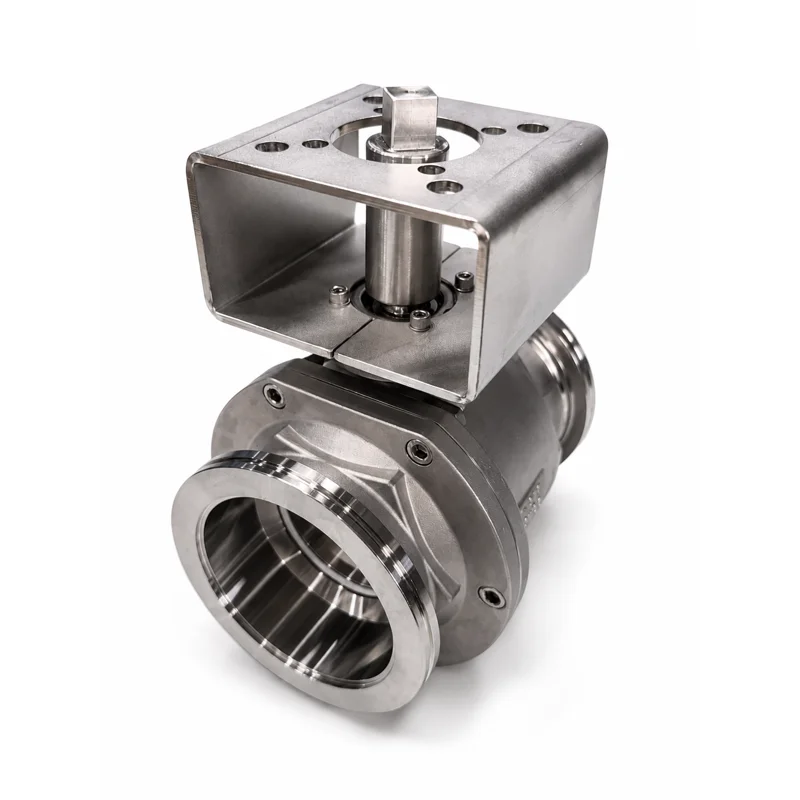
| Befestigung des Stellantriebs | ISO 5211 – Der Antrieb wird direkt an das Ventil angeschraubt, ohne Halterung oder Kupplung |
| Federrückstellposition | Normalerweise geschlossen oder normalerweise offen – bitte bei der Bestellung angeben |
| Optionen | Magnetventil, Endschalterkasten, Stellungsregler |
| Service | Automatisierte Isolierung und Sequenzierung auf Vakuumleitungen |
Vacuum Rated Valve Design: Why a Pneumatic Ball Valve
- Geschwindigkeit: Vakuumabläufe sind zeitlich gesteuert. Bei einem Handventil ist der Bediener der Engpass; bei einem pneumatischen Stellantrieb ist dies nicht der Fall.
- Direktmontage: Der Ventilkörper ist mit einer ISO 5211-Auflage ausgestattet, sodass der Antrieb ohne Halterung, ohne Kupplung und ohne Ausrichtungsaufwand angeschraubt werden kann.
- Federrückstellung bei Luftverlust: Eine SR-Einheit bewegt sich bei Ausfall der Luftzufuhr an die von Ihnen angegebene Position. Teilen Sie uns bitte mit, ob diese Position offen oder geschlossen ist, und wir werden sie entsprechend ausführen.
- Mit voller Kraft voraus: Da nichts die Leitung verengt, geht keine Leitfähigkeit durch das Ventil verloren.
- Edelstahl 316, PTFE-Sitze: a clean, corrosion-resistant combination for vacuum service.
Pneumatic Vacuum Valve Ends: NW50 KF or ISO-K
NW50 (ISO-KF / KF50), 2″ — V-2VN. The KF clamp flange seals with a single clamp and a centring ring, no bolts, so the valve connects straight into a standard KF line and opens tool-free for service. The dimension sheet above gives face-to-face length, height to actuator top, flange O.D. and tube O.D.
ISO-K ISO80 (DN80, 3″) and ISO100 (DN100, 4″) — V-2BN-ISOK. The ISO-K flange clamps straight into a standard ISO-K line, no adapter needed, for the larger fore-lines and pump connections where KF sizes run out.
Anwendungen
- Trennung der Vakuumpumpe — shutting a pump out of the line for service without venting the system.
- Roughing and backing lines — isolating rotary-vane or scroll pumps from the chamber.
- Freeze-drying systems — isolating the vacuum line between the freeze dryer and its pump.
- Vacuum ovens — shutting off chamber vacuum before the pump is switched off.
- Laboratory vacuum piping — automated on/off on KF and ISO-K lines under PLC control.
Siehe auch: Die handbetätigte Version dieses Ventils ist unser manuelles Vakuumventil; Informationen zur Umleitung zwischen zwei Vakuumleitungen finden Sie unter 3-Wege-Vakuum-Kugelhahn. KF/NW-Zentrierringe sind hier.
Häufig gestellte Fragen
Welche Flanschgrößen sind erhältlich?
NW50 (ISO-KF / KF50) clamp flange at 2″ (V-2VN), and ISO-K in ISO80 (DN80, 3″) and ISO100 (DN100, 4″) (V-2BN-ISOK). Each clamps straight into its standard line — no adapter needed.
What is the difference between the NW50 KF version and the ISO-K version?
The valve, seats, actuator and ISO 5211 mounting are the same. The difference is the flange: KF is a small clamp flange that seals with one clamp and a centring ring, used for the 2″ size; ISO-K is the larger flange standard used for the 3″ and 4″ sizes. Choose by the flange already on your line.
Doppeltwirkend oder federrückstellend – wofür soll ich mich entscheiden?
Bei der doppeltwirkenden Ausführung wird zum Öffnen und Schließen Druckluft verwendet, und das Ventil behält seine letzte Position bei, wenn die Druckluftzufuhr ausfällt. Bei der federrückstellenden Ausführung wird in eine Richtung Druckluft und in die andere Richtung eine Feder verwendet, sodass sich das Ventil bei Druckluftverlust in eine voreingestellte Position bewegt. Teilen Sie uns bitte mit, ob diese Position „offen“ oder „geschlossen“ sein soll, und wir fertigen das Ventil entsprechend an.
Wie groß ist der Betriebstemperaturbereich?
Valve −20 °C to +180 °C, set by the PTFE seats. Actuator −20 °C to +80 °C.
Benötigt der Stellantrieb eine Halterung?
Nein. Der Ventilkörper verfügt über eine Befestigungsfläche nach ISO 5211, sodass der Antrieb direkt angeschraubt werden kann – es muss weder etwas bearbeitet noch ausgerichtet werden.
Kann ich ein Magnetventil oder einen Endschalter hinzufügen?
Ja. Der Stellantrieb lässt sich mit einem Magnetventil zur Steuerung, einem Endschalterkasten zur Positionsrückmeldung und einem Stellungsregler für den Modulationsbetrieb kombinieren – teilen Sie uns bei Ihrer Angebotsanfrage bitte Ihre Steuerungskonfiguration mit.
Gibt es eine Mindestbestellmenge?
Nein. Wir haben keine Mindestbestellmenge. Teilen Sie uns einfach mit, was Sie benötigen, und wir erstellen Ihnen ein Angebot.
Musterpolitik
Wir stellen unseren Kunden gerne Produktmuster zur Verfügung, um die Qualität zu bewerten oder Tests durchzuführen. Der Prozess beginnt in der Regel mit einem Angebot auf der Grundlage der Spezifikationen des Kunden.
Wenn der Preis akzeptabel ist, können wir je nach Produkttyp und Verfügbarkeit kostenlose oder kostenpflichtige Muster anbieten.
Die Versandgebühren gehen zu Lasten des Kunden.
Bestellvorgang
Nachdem wir die Produktanforderungen und andere Details mit dem Kunden abgestimmt haben, stellen wir eine Verkaufsbestätigung zur Genehmigung aus. Nach der Bestätigung muss der Kunde eine 30%-Anzahlung leisten, um mit der Produktion fortzufahren.
Wenn die Massenproduktion abgeschlossen ist und die Waren die Inspektion bestehen, muss der Kunde den Restbetrag 70% bezahlen, bevor der Versand veranlasst wird.
Verwandte Produkte


Häufig gestellte Fragen
A. Wie kann ich ein Angebot anfordern?
Bitte fügen Sie ein detailliertes Anfrageformular mit Produktspezifikationen, Materialien, Mengen und besonderen Anforderungen bei. Wir werden Ihnen ein Angebot auf der Grundlage Ihrer Anfrage unterbreiten.
B. Wie lauten Ihre Angebotsbedingungen?
Unsere Kostenvoranschläge basieren in der Regel auf FOB-Bedingungen. Wir können aber auch anbieten CFR, CIFoder andere Incoterms auf Anfrage.
C. Wie hoch ist Ihre Mindestbestellmenge (MOQ)?
MOQ depends on the product. We operate on a made-to-order basis, and trial orders are welcome. For smaller orders, freight is arranged and borne by the buyer.
D. Wie lauten Ihre Zahlungsbedingungen?
per Überweisung - 30% Anzahlung bei Auftragsbestätigung, und 70% Restbetrag vor Versand.
E. Wie lange ist Ihre Vorlaufzeit?
Die Lieferzeit hängt von der Bestellmenge und den Spezifikationen ab. Wir werden Ihnen den genauen Zeitplan bestätigen, sobald Sie Ein Angebot anfordern.
Möchten Sie mehr erfahren?
Wenn Sie sich für eines unserer Produkte oder eine unserer Dienstleistungen interessieren, füllen Sie einfach das unten stehende Formular aus. Unser Team wird sich so schnell wie möglich mit Ihnen in Verbindung setzen und Ihnen die gewünschten Informationen zukommen lassen.