
In the early days of my career, 35 years ago, the sight of an operator turning a heavy handwheel was the universal symbol of fluid control. But as industries scaled and safety regulations tightened, the need for speed, precision, and remote operation became undeniable. This transition birthed the era of pneumatic actuated stainless steel industrial valves. At Yzng Trong International, we’ve watched this evolution firsthand—from the first rudimentary air-cylinder attachments to the sophisticated, integrated automation packages we provide today. An automated valve isn’t just a convenience; it’s a critical upgrade that transforms a static pipe network into a dynamic, responsive system. When we talk about these “actuated” solutions, we are discussing the nervous system of the modern factory.
Integrating a pneumatic actuator with our high-quality pneumatic actuated stainless steel industrial valves requires more than just bolting two pieces of hardware together. It requires a deep understanding of torque, air pressure, and response times. In my three decades of consulting, I’ve seen many plants struggle with “automation lag” or “actuator stalling” simply because the pairing between the valve and the actuator wasn’t engineered correctly. At Yzng Trong, we treat the actuator and the valve as a single, unified organ. Just as a surgeon ensures that a prosthetic limb moves in perfect harmony with the body, we ensure that the pneumatic force translates into smooth, reliable ball rotation. This guide is designed to help you navigate the complexities of valve automation, sharing the technical nuances we’ve mastered to keep global industries flowing at the touch of a button.
Choosing the Perfect Powerhouse for Your Stainless Steel Industrial Valves
When selecting the drive mechanism for your pneumatic actuated stainless steel industrial valves, you are essentially choosing the “muscle” of your system. In the world of pneumatic automation, the two dominant architectures are the Rack and Pinion actuator and the Scotch Yoke actuator. Each has its own torque profile and ideal application. In my 35 years, I’ve learned that choosing the wrong one can lead to either an oversized, expensive system or an undersized, unreliable one. Most of our standard industrial ball valves use Rack and Pinion actuators because of their compact size and linear torque output, which is perfect for the 90-degree rotation required by ball and butterfly valves.
The Versatility of Rack and Pinion Actuators
Rack and Pinion actuators are the workhorses of the pneumatic actuated stainless steel industrial valves world. Their design is elegant in its simplicity: a piston moves a rack, which turns a pinion gear connected to the valve stem. This setup provides a very consistent torque throughout the entire stroke. For 90% of industrial applications—such as water treatment or general chemical processing—this consistency is exactly what you need. Over the years, I’ve found that the double-acting (DA) version is most common for standard processes, while the spring-return (SR) version is the “safety champion.” If the air supply fails, the internal springs automatically push the valve back to its “fail-safe” position (either closed or open). This is a non-negotiable requirement in hazardous chemical lines where an uncontrolled flow during a power outage could lead to a disaster.
High-Torque Performance of Scotch Yoke Designs
While Rack and Pinion units are great for general use, there are times when your pneumatic actuated stainless steel industrial valves face extreme challenges—such as high-pressure steam or thick, viscous slurries. This is where the Scotch Yoke design becomes essential. Unlike the linear torque of a rack and pinion, a Scotch Yoke actuator provides a “torque curve” that is highest at the beginning and end of the stroke. This is precisely when a valve needs the most force—to “break away” from the seat during opening and to ensure a tight seal during closing. In my 35 years of troubleshooting large-scale oil and gas installations, I’ve often replaced failing rack-and-pinion units with Scotch Yoke actuators to overcome seat friction issues. Understanding this subtle difference in torque delivery is what separates an amateur installer from a fluid control master.
Technical Selection Criteria and Torque Sizing Sizing
The most critical step in engineering pneumatic actuated stainless steel industrial valves is the “Torque Calculation.” If the actuator is too small, it won’t be able to turn the ball against the fluid pressure; if it’s too large, it can snap the valve stem or damage the internal seats. At Yzng Trong, we use a strict “Safety Factor” method. We take the “Break-to-Open” torque of the valve (the force needed to start the turn) and multiply it by a factor—typically 1.3 to 1.5—to account for factors like seat aging, fluid viscosity, and pressure fluctuations. I’ve seen many “budget” competitors skip this safety margin to save money on smaller actuators, only to have the valves seize up six months later when the seals have slightly hardened.
| Valve Size (NPS) | Valve Torque (Nm) | Recommended Actuator Torque (Nm) | Air Pressure (Bar) | Common Application |
| 1/2″ (DN15) | 5 – 8 | 12 (Model YT-052) | 5.5 | Lab automation, small chemical feeds |
| 1″ (DN25) | 12 – 18 | 25 (Model YT-063) | 5.5 | Food processing, water treatment |
| 2″ (DN50) | 45 – 60 | 85 (Model YT-092) | 5.5 | Industrial cooling, batch processing |
| 3″ (DN80) | 120 – 150 | 210 (Model YT-125) | 5.5 | Mainline shutoff, slurry transport |
| 4″ (DN100) | 280 – 350 | 480 (Model YT-160) | 5.5 | Heavy industrial, energy sector |
This table represents the baseline for our pneumatic actuated stainless steel industrial valves. However, as a veteran, I always tell my clients that “dry” torque (testing with air) is different from “wet” torque (testing with the actual fluid). If you are moving a thick oil or a chemical that causes the PTFE seats to swell, the torque requirements can jump by 50% or more. This is why we insist on a consultation before finalizing an automation package. We don’t just want to sell you a valve; we want to sell you a system that works under your specific, real-world conditions. By aligning these technical specifications with your operational reality, we ensure that your automated flow is as reliable as a heartbeat.
Installation and Calibration: Ensuring Precise Response
Once you have the right hardware, the installation of pneumatic actuated stainless steel industrial valves becomes a task of precision alignment. In my 35 years, the most common failure point I’ve seen isn’t the actuator or the valve—it’s the “mounting kit.” If the bracket and coupler that connect the two are even slightly misaligned, they create “side-loading” on the valve stem. This leads to stem leaks and premature actuator wear. At Yzng Trong, we’ve solved this by manufacturing our valves with ISO 5211 direct-mount pads. This eliminates the need for complex brackets and ensures that the actuator sits perfectly centered on the valve stem. This “direct-mount” revolution has been one of the biggest improvements in valve automation I’ve seen in my career.
The Importance of ISO 5211 Mounting Pads
The ISO 5211 standard is the “universal language” of pneumatic actuated stainless steel industrial valves. It defines the bolt patterns and stem dimensions so that an actuator from one manufacturer can fit a valve from another. But beyond compatibility, it’s about stability. By mounting the actuator directly to the valve body, we reduce the “stack height” and vibration. I’ve been to sites where old-fashioned “bracket and coupling” setups were vibrating so much that the bolts were literally backing out. A direct-mount Yzng Trong valve stays rock-solid even in high-vibration environments like pump stations or marine engine rooms. When you invest in a direct-mount system, you are investing in a cleaner, safer, and more compact automation solution that is significantly easier to maintain.
Calibrating Solenoid Valves and Limit Switches
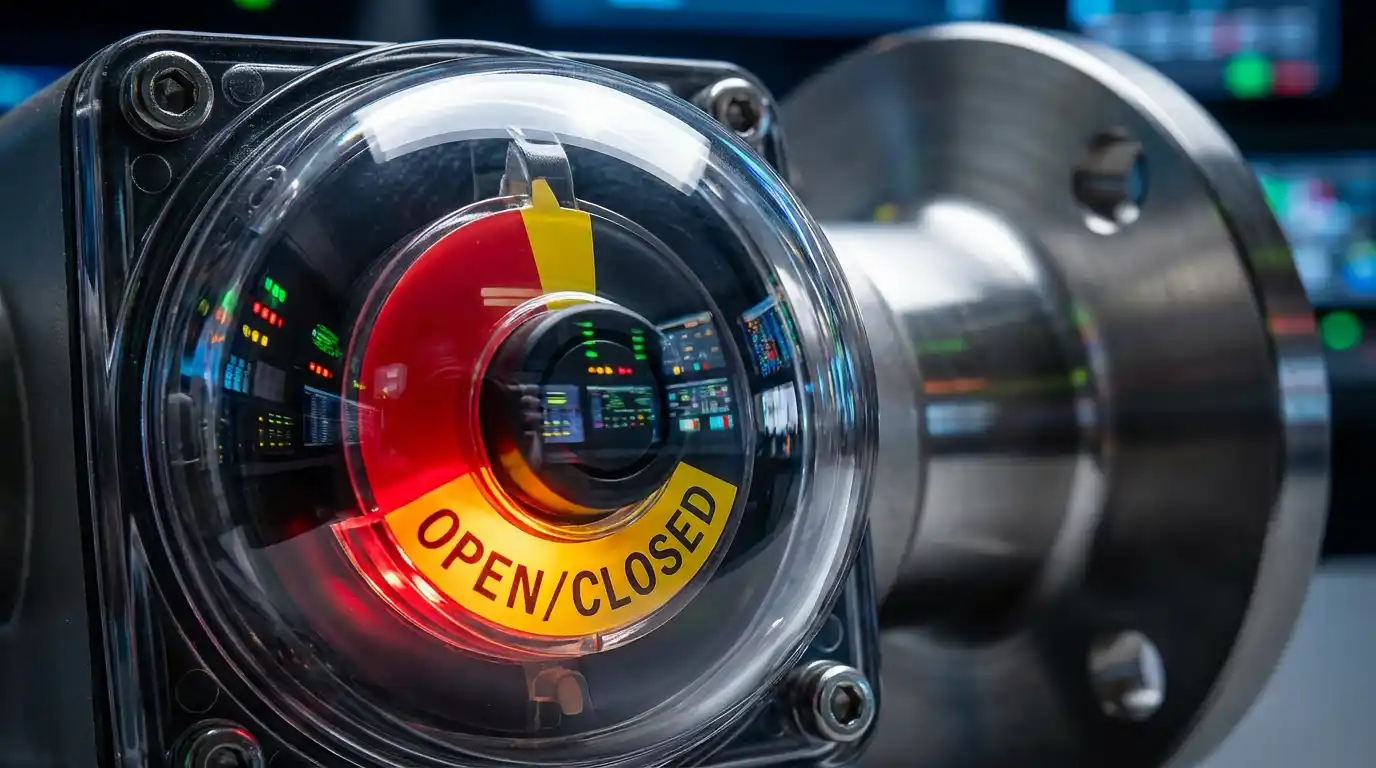
The “brains” of your pneumatic actuated stainless steel industrial valves are the accessories—the solenoid valves and limit switches. The solenoid valve acts as the electrical-to-pneumatic interface, taking a signal from your PLC (Programmable Logic Controller) and directing air into the actuator chambers. Calibration here is about timing. If your process requires a “soft close” to prevent water hammer, we can install speed controllers (exhaust mufflers) to slow down the actuator’s stroke. On the other hand, the limit switch box provides “feedback”—it tells your control room if the valve is actually open or closed. I’ve seen many automated systems fail because the limit switches weren’t set correctly, leading the computer to believe a valve was closed when it was actually 10% open. Setting these switches with a precision of +/- 1 degree is a hallmark of a professional Yzng Trong installation.
Maintenance and Troubleshooting in Automated Systems
Maintaining pneumatic actuated stainless steel industrial valves requires a dual-track approach: you must maintain the mechanical valve and the pneumatic drive. In my 35 years of field service, I’ve found that air quality is the #1 factor in actuator longevity. Compressed air is often full of moisture and oil carryover from the compressor. If this moisture gets into the actuator, it can wash away the internal grease and cause corrosion on the cylinder walls. This is why I always insist that my clients install a “Filter-Regulator” (FR) unit immediately before the valve. A clean, dry air supply can extend the life of an actuator from 2 years to over 10 years. It’s a small investment that pays massive dividends in reliability.
When troubleshooting pneumatic actuated stainless steel industrial valves, the first thing I check is “Air Leakage.” If you hear a hiss coming from the actuator, it’s usually a sign that the internal O-rings or piston seals have worn out. Most quality actuators, including ours, are field-repairable with a simple seal kit. Another common issue is “Actuator Hunting”—where the valve moves back and forth rapidly without finding its position. This is usually an issue with the positioner (if it’s a modulating valve) or a fluctuating air supply. My 35 years of experience have taught me to look at the system as a whole. Don’t just blame the valve; check the air pressure, check the electrical signal, and check the cleanliness of the lines. By taking this holistic view, you can resolve “complex” automation issues in minutes instead of days.
The Future of Automation: Smart Valves and Industry 4.0
As we look toward the next 35 years, the world of pneumatic actuated stainless steel industrial valves is becoming “smarter.” We are now seeing the integration of digital positioners and IIoT (Industrial Internet of Things) sensors directly into the valve assembly. Imagine a valve that can send a text message to your phone when its seals are starting to wear, or a system that can automatically adjust its flow rate based on real-time demand from across the plant. This is the future Yzng Trong is preparing for. We are already incorporating “Smart Positioners” that provide diagnostic data, allowing for “Predictive Maintenance” instead of “Reactive Maintenance.” This shift will revolutionize how industries manage their fluid systems, moving us toward a zero-downtime world.
However, no matter how “smart” the electronics become, the core of the system will always be the mechanical integrity of the pneumatic actuated stainless steel industrial valves. A computer can’t stop a leak if the steel body is cracked or the ball is scored. That’s why our commitment to high-grade 316 stainless steel and precision machining remains our top priority. We are merging 35 years of “old world” craftsmanship with “new world” technology. For us, Commercial Integrity means that while we embrace the future, we never compromise on the foundational quality that built our reputation. Whether you are building a traditional chemical plant or a state-of-the-art automated biotech facility, Yzng Trong is here to provide the precise, reliable, and automated flow control solutions that your vision demands.