
When we look at a magnificent skyscraper or a luxury apartment complex, we see the glass, the steel, and the architectural vision. But as a fluid control veteran with 35 years at Yzng Trong International, my eyes go straight to what is behind the walls. A modern building is a living organism, and its “blood” is the water and air that circulate through miles of hidden piping. To keep this organism healthy, safe, and comfortable, you need a sophisticated network of Building System Industrial Valves. These valves are the invisible lifelines that regulate the indoor climate, ensure the fire sprinklers are ready at a second’s notice, and deliver clean water to every floor. In my career, I’ve seen how the right valve selection can reduce a building’s energy footprint by 20% while providing a level of safety that allows thousands of people to sleep soundly.
The requirements for Building System Industrial Valves have evolved dramatically since I started in 1990. We are no longer just looking for “plumbing parts.” Modern buildings demand “smart” valves that can communicate with the Building Management System (BMS), high-durability valves that can handle the massive pressures found at the bottom of a 100-story tower, and lead-free valves that ensure the highest water quality. At Yzng Trong, we have spent three and a half decades perfecting our line of building-focused valves, blending industrial-strength reliability with the precision required for residential and commercial interiors. Whether it’s a high-performance butterfly valve for a central cooling plant or a stainless steel ball valve for a domestic water line, our mission is to provide the “peace of mind” that comes from knowing every drop is under control. This guide explores the technical depth of these silent guardians and how they define the quality of the spaces we live and work in.
The Invisible Lifeline: My 35-Year Experience with Building System Industrial Valves
Over the last 35 years, I’ve had the privilege of walking through some of the most complex mechanical rooms in the world. I remember an early project for a massive commercial shopping mall where they were experiencing constant “hot spots” and “cold spots” in their air conditioning. After an audit, we discovered they were using low-quality, non-standard valves that were prone to leaking internal flow, making it impossible to balance the water distribution. By replacing their system with our precision-engineered Building System Industrial Valves, we were able to stabilize their HVAC performance and significantly lower their electricity bills. That project taught me that in a building, the valve is the ultimate arbiter of comfort. If the valve fails, the system fails, and the inhabitants suffer.
My experience has also shown me that the “environment” inside a building can be just as harsh as an industrial site. High-rise buildings create immense static pressure at the lower levels—pressures that can easily blow out a standard residential valve. This is why our Building System Industrial Valves are built to industrial standards, using Grade 304 and 316 stainless steel to ensure they can handle the mechanical stress and the corrosive effects of chemically treated HVAC water. At Yzng Trong, we treat every building as a mission-critical facility. Whether it’s an airport terminal or a high-end condominium, our valves are designed to be the “install and forget” solution that architects and facility managers rely on. We don’t just sell valves; we sell the structural integrity of the building’s fluid systems.
Optimizing Climate Control: HVAC Systems and Precision Flow
The HVAC (Heating, Ventilation, and Air Conditioning) system is the single largest energy consumer in most modern buildings. To achieve the “Green Building” certifications required today, every component of the system must be optimized, starting with the Building System Industrial Valves. In a central chilled water system, valves are used to regulate the flow of water to air handling units (AHUs) and fan coil units (FCUs). If the flow is not precisely controlled, the chiller has to work harder, and the pumps use more energy. This is why precision is at the heart of everything we do at Yzng Trong.
Managing Thermal Efficiency in Modern Skyscrapers
In high-rise construction, managing thermal efficiency is a battle against gravity and height. Chilled water must be pumped up hundreds of feet, and the pressure must be managed at every branch. Our Building System Industrial Valves, particularly our flanged butterfly valves and check valves, are designed with low-torque operation and high Cv (Flow Coefficient) values to minimize pressure drops. I’ve seen projects where using the wrong valve caused such a significant pressure loss that the building had to install an additional booster pump. By using Yzng Trong’s high-efficiency valves, you can optimize the “Delta T” (temperature difference) in your system, ensuring that the chiller runs at its most efficient point. This isn’t just about comfort; it’s about the financial and environmental sustainability of the property.
The Vital Role of Balancing Valves in Large-Scale Cooling
One of the most complex aspects of building fluid dynamics is “balancing.” In a large system, the water naturally wants to take the path of least resistance, which means the rooms closest to the pump get too much cooling, and the rooms at the end of the line get too little. This is where specialized Building System Industrial Valves—specifically balancing valves—become critical. These valves allow the contractor to “tune” the flow to each branch. In my 35 years, I’ve seen the shift from manual balancing to “Pressure Independent Control Valves” (PICVs). At Yzng Trong, we ensure that our valves provide the repeatable, accurate adjustments needed for a perfectly balanced building. When every floor receives the exact amount of chilled water it needs, the entire building operates in a state of thermal equilibrium, maximizing comfort and minimizing waste.
Safety Without Compromise: Fire Protection and Emergency Valves
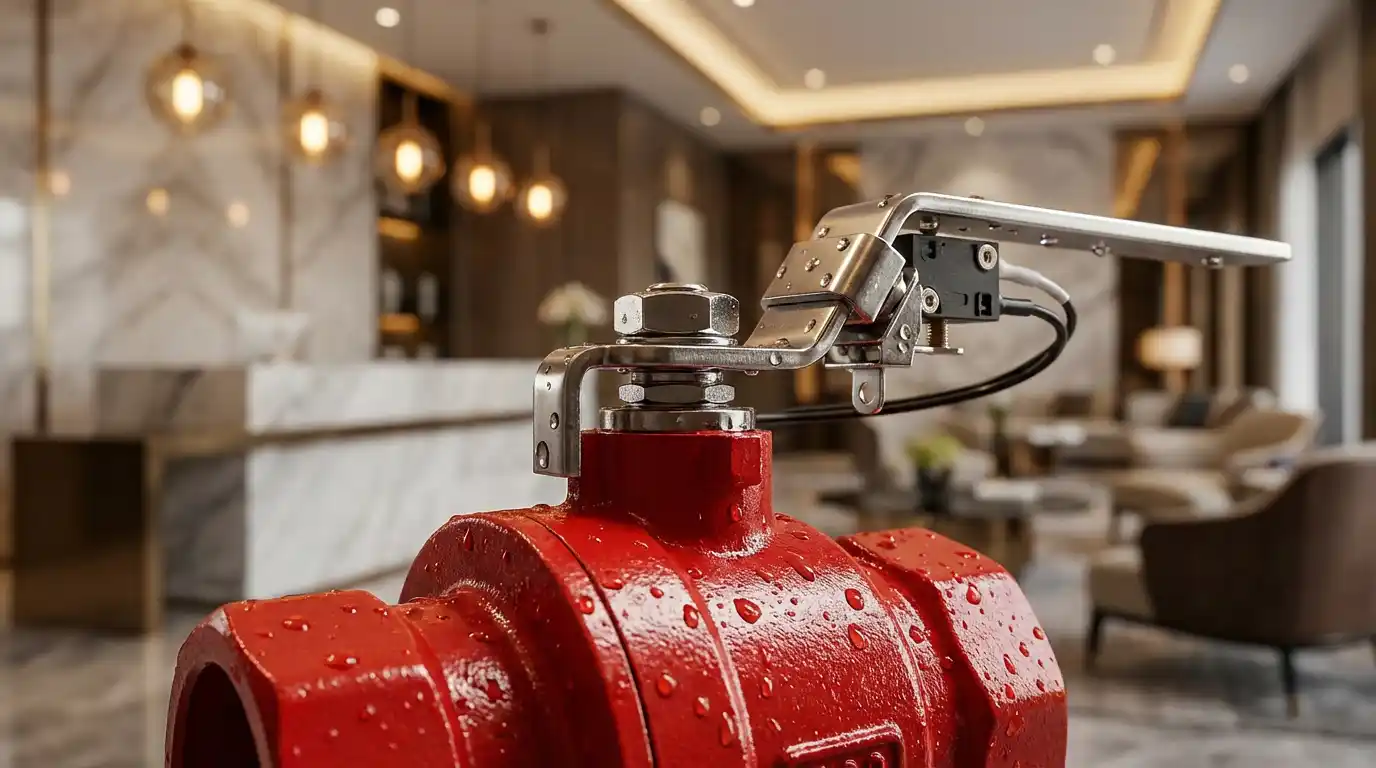
While HVAC systems provide comfort, the fire protection system provides survival. This is the one system in a building that you hope will never be used, but it must be 100% reliable if it is. The Building System Industrial Valves used in fire sprinkler systems and standpipes are subject to the strictest international safety standards, such as UL and FM. These valves must be “fail-open” in many cases and must be able to withstand the high-velocity flow and pressure surges that occur when a fire pump is activated. At Yzng Trong, we take this responsibility with the utmost seriousness. Our fire-rated valves are tested to ensure they can stay dormant for decades and still open perfectly in an emergency.
I remember a harrowing fire safety audit for an old industrial warehouse being converted into luxury lofts. The original fire valves were so rusted and seized that they couldn’t be turned even with a pipe wrench. It was a disaster waiting to happen. We replaced the entire safety manifold with our stainless steel Building System Industrial Valves, ensuring that the new residents would be protected by a system that resists corrosion and remains operable for the life of the building. We emphasize that fire safety valves must be equipped with “Tamper Switches” to ensure the control room knows immediately if a valve has been closed. This level of safety integration is what separates a standard valve from a Yzng Trong life-safety solution. We aren’t just selling fire equipment; we are providing the “last line of defense” for people’s lives.
Plumbing and Potable Water: Ensuring Safety and Durability
The third pillar of Building System Industrial Valves is the domestic water system. This is the water people drink, bathe in, and use for cooking. In recent years, there has been a global shift toward “lead-free” and “low-carbon” materials to ensure that the valves themselves don’t leach harmful substances into the drinking water. At Yzng Trong, we have led this transition, offering a full range of stainless steel valves that meet the most stringent health standards. Stainless steel is the ideal material for potable water because it doesn’t require the chemical coatings that can break down over time, and it has a natural resistance to the “biofilms” that can harbor bacteria like Legionella.
Lead-Free Standards and Material Integrity for Drinking Water
When I discuss plumbing with developers, I always push for Grade 304 or 316 stainless steel Building System Industrial Valves. While brass has been the traditional choice, the potential for lead leaching—even in “lead-free” brass—is a concern for modern health-conscious consumers. Stainless steel is 100% lead-free and provides a much longer service life. I’ve visited buildings where the brass valves were failing due to “dezincification”—a process where the zinc is leached out of the alloy, leaving a brittle, porous structure. Our stainless steel valves are immune to this process. By choosing Yzng Trong, you are ensuring that the building’s residents have access to safe, clean water for the next 50 years. It’s an investment in public health that we take very seriously.
Vibration Control and Water Hammer Prevention in High-Rise Plumbing
In high-rise buildings, a common problem is “Water Hammer”—the loud banging noise and physical vibration that occurs when a valve is closed too quickly, causing a pressure wave to bounce back through the pipes. This can be destructive, eventually causing pipe joints to fail and valves to leak. Part of our engineering for Building System Industrial Valves involves the use of “Slow-Close” mechanisms and “Silent Check Valves.” My 35 years of experience have shown me that a “quiet” building is a well-engineered building. By using valves designed to mitigate water hammer, we protect the entire plumbing infrastructure from mechanical fatigue. At Yzng Trong, we look at the building’s plumbing as a symphony; if one valve is out of tune, it affects the whole performance. Our goal is a silent, reliable, and durable water system.
Strategic Selection: Building System Industrial Valves Comparison
To help architects, MEP (Mechanical, Electrical, and Plumbing) engineers, and contractors make the best choice, I’ve compiled a comparison table of our primary Building System Industrial Valves. The key to a successful building project is matching the valve to its specific function and pressure zone. A valve that is perfect for a rooftop cooling tower might be overkill for a basement drainage line. This table reflects the practical, “on-the-ground” knowledge we’ve gathered over 35 years, helping you optimize your project’s performance and budget.
| System Application | Valve Category | Recommended Material | Automation Ready | Key Advantage |
| Main Chiller Plant | Butterfly Valve | SS304 / SS316 | Yes (Actuated) | High flow, low pressure drop |
| Fire Sprinkler System | Gate / Ball Valve | SS316 (Fire Rated) | Yes (Monitoring) | Reliability, high-pressure rating |
| Domestic Hot Water | Ball Valve | SS316L | No | Corrosion & Scale resistance |
| Potable Water Lines | Ball Valve | SS304 / SS316 | No | 100% Lead-Free, hygienic |
| HVAC Branch Lines | Balancing Valve | Brass / SS | Yes | Precise thermal equilibrium |
| Basement Pumps | Check Valve | SS316 (Silent) | N/A | Prevention of Water Hammer |
When selecting Building System Industrial Valves, always consider the “Ease of Maintenance.” In a crowded mechanical room, you don’t want a valve that requires a massive team to service. This is why our 3-piece ball valves are so popular in building systems; they can be serviced in-line, reducing the labor required for routine seal replacements. At Yzng Trong, we provide the technical data sheets and CAD models to help engineers integrate our valves seamlessly into their Revit or AutoCAD designs. We aren’t just a hardware manufacturer; we are your technical partner from the design phase to the final commissioning. We understand that a building’s success is measured in decades, and our valves are built to last exactly that long.
The Yzng Trong Commitment: Building Safer, More Efficient Spaces
As we look toward the future of “Smart Cities” and “Intelligent Buildings,” the role of Building System Industrial Valves is becoming more integrated than ever. We are moving toward a world where every valve in a skyscraper is connected to a central dashboard, allowing facility managers to monitor flow, pressure, and leakage in real-time. At Yzng Trong International, we are already preparing for this future by equipping our valves with smart actuators and sensors. But even as we add more technology, our core focus remains on “Commercial Integrity”—the honest material quality and precision machining that have been our hallmark for 35 years.
In conclusion, a building is only as strong as its weakest valve. Whether it’s providing the cooling for a data center, the safety for a hospital, or the water for a family home, our Building System Industrial Valves are the foundation of modern urban living. My journey over the last three and a half decades has taught me that there are no shortcuts to quality. When you choose Yzng Trong, you are choosing a legacy of excellence that is built into every valve we ship. Thank you for trusting us to be the silent guardians of your buildings. We look forward to another 35 years of building safer, more efficient, and more comfortable spaces for everyone, everywhere.