
As a veteran with over three decades in the trenches of the fluid control industry, I have come to realize that the world operates on things we rarely see. We often marvel at massive skyscrapers or high-speed ships, but as a specialist at Yzng Trong International, my focus has always been on the silent guardians within their walls: stainless steel industrial valves. These components are the actual “muscles” and “valves” of our industrial heart. Since 1990, I have witnessed the evolution of fluid dynamics from simple manual systems to the high-precision, automated environments we see today. Choosing the right stainless steel industrial valves is not merely a procurement task; it is an engineering commitment to safety, longevity, and operational efficiency. In this guide, I want to share the hard-earned wisdom of 35 years—wisdom that goes beyond data sheets and into the practical reality of what makes a system truly resilient.
In my early years, the industry was still grappling with material limitations, but the rise of specialized stainless steel alloys changed everything. Today, when we talk about stainless steel industrial valves, we are discussing the pinnacle of metallurgy. These valves must withstand extreme pressures, resist aggressive chemical corrosion, and maintain a bubble-tight seal for years, if not decades. At Yzng Trong, we treat every valve as if it were being installed in our own facility. This philosophy of “commercial integrity” has allowed us to serve clients from the United States to Brazil and beyond. When you hold one of our valves, you aren’t just holding a piece of hardware; you are holding 35 years of trial, error, and ultimate success in the most demanding environments on Earth. We understand that a single failure can lead to catastrophic downtime, and that is why our focus remains steadfast on the uncompromising quality of our stainless steel industrial valves.
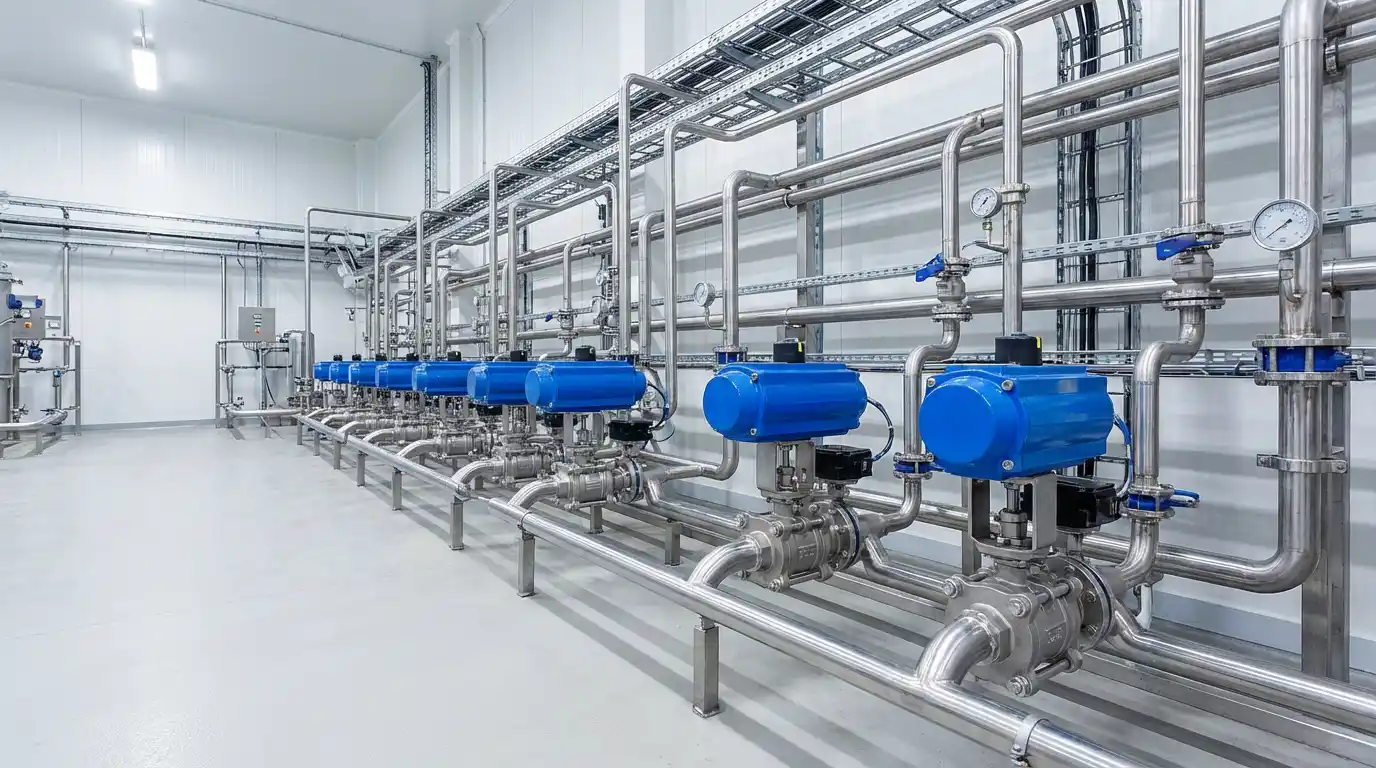
The Metallurgy of Reliability: Why Material Choice Defines Performance
When I sit down with a project engineer to discuss their requirements, the first topic is always the material. In the realm of stainless steel industrial valves, the choice between Grade 304 and Grade 316 is fundamental. Many people look at the price tag first, but I urge them to look at the chemistry. Grade 304 is an excellent choice for general water and air applications, providing great corrosion resistance for everyday use. However, my 35 years of experience have taught me that “everyday use” is rare in heavy industry. Most of our clients operate in environments where chlorides, acids, and salt spray are constant threats. This is where Grade 316 stainless steel industrial valves shine. The addition of molybdenum makes them nearly impervious to pitting corrosion, which is the silent killer of fluid systems in coastal or chemical processing plants.
I once consulted for a marine infrastructure project where the previous supplier had provided standard alloy valves. Within eighteen months, the salt air had literally eaten through the valve bodies. We stepped in with our Grade 316 stainless steel industrial valves, and a decade later, those same valves are still operating flawlessly. This isn’t just about avoiding rust; it’s about the microscopic structural integrity of the metal. We ensure that our casting processes are monitored for any impurities that could lead to stress corrosion cracking. For us, stainless steel industrial valves represent a promise of durability. When we specify a material, we are predicting its behavior ten or twenty years into the future. It’s this long-term vision that has established Yzng Trong as a trusted technical partner. We don’t just sell you a valve; we provide the metallurgical assurance that your system will remain secure regardless of how harsh the external or internal environment becomes.
Architectural Diversity: Engineering the Perfect Ball Valve
The ball valve is perhaps the most versatile tool in our arsenal of stainless steel industrial valves. Over the years, I’ve seen this design adapted for everything from simple residential plumbing to complex cryogenic systems. At Yzng Trong, we have refined the architecture of our ball valves into three primary categories: one-piece, two-piece, and three-piece designs. Each has its specific “sweet spot” in an industrial setting. The one-piece design is incredibly robust and cost-effective for reduced-port applications where space is limited. The two-piece design is the standard for most industrial flow requirements, offering a full-port flow that minimizes pressure drops. However, when I talk to maintenance managers, they always lean toward our three-piece stainless steel industrial valves. The ability to “swing out” the center section for seat replacement without removing the pipe ends is a game-changer for reducing plant downtime.
The Advantage of 3-Piece Serviceable Designs
The three-piece design is the ultimate expression of user-centric engineering in stainless steel industrial valves. In my 35 years of field visits, I have seen maintenance teams struggle with seized pipes and inaccessible valve bodies. By utilizing a three-piece configuration, we allow the valve to be serviced in-line. This is particularly critical in systems that use welded connections (Butt Weld or Socket Weld), where removing the entire valve would require cutting the pipe. Our stainless steel industrial valves in this category are built with precision-machined bolts and seals that ensure that once the valve is put back together, it maintains its original factory-spec seal. This design philosophy recognizes that the initial purchase price is only a small fraction of the total cost of ownership. By making maintenance easier, we help our clients save thousands of dollars in labor and lost production time over the life of the valve.
Precision Engineering in High-Pressure (2000 WOG) Applications
When we move into high-pressure territory, the engineering requirements for stainless steel industrial valves escalate exponentially. Our 2000 WOG (Water, Oil, Gas) rated valves are designed to handle 2000 PSI of pressure, which is an immense amount of stored energy. To achieve this, we focus on the “trinity” of high-pressure design: the wall thickness of the body, the sphericity of the ball, and the resilience of the seat material. We often use reinforced PTFE (RPTFE) or carbon-filled seats to prevent the high pressure from “extruding” the seal into the port. I’ve seen inferior stainless steel industrial valves fail at high pressures because the ball wasn’t perfectly round, causing uneven wear on the seats. At Yzng Trong, our CNC machining centers operate with micron-level tolerances to ensure that the seal is absolute. In high-pressure environments, there is no room for “good enough”—there is only perfection, and that is what our 35 years of experience brings to every high-pressure valve we ship.
Sanitary Excellence: Purity Standards in Food and Biotech
In the food, beverage, and pharmaceutical industries, the role of stainless steel industrial valves shifts from pure strength to absolute purity. This is a sector where I have spent a significant portion of my career, ensuring that the valves we provide meet the most stringent hygienic standards. Sanitary valves must be “microbiologically clean,” meaning there are no “dead zones” or crevices where bacteria could take hold. Our sanitary stainless steel industrial valves feature mirror-polished internal surfaces (often measured by their Ra value) to ensure that the fluid moves through the valve without any turbulence or residue buildup. When you are processing dairy products or life-saving vaccines, the integrity of the valve is synonymous with the safety of the consumer.
I’ve worked with several international breweries where the primary concern was the “Clean-in-Place” (CIP) compatibility. Our sanitary stainless steel industrial valves are designed to withstand the harsh caustic chemicals and high-temperature steam used during cleaning cycles without losing their seal integrity. We utilize Grade 316L (Low carbon) stainless steel specifically for these applications to prevent intergranular corrosion during the welding of the tri-clamp or weld-end connections. My experience has taught me that in the biotech world, a valve isn’t just a flow controller; it’s a sterile barrier. By providing stainless steel industrial valves that are as smooth as glass on the inside and rugged on the outside, we help our clients maintain the highest levels of quality control. It’s this intersection of biology and mechanical engineering that makes our work in the sanitary sector so rewarding and critical.
Specialized Solutions: Vacuum and High-Temperature Challenges
Not every industrial system operates at standard atmospheric conditions. Over the last 35 years, Yzng Trong has become a specialist in the “extremes”—the high-vacuum and high-temperature environments that break standard equipment. Vacuum technology is particularly tricky because you are trying to prevent air from leaking into a system. This requires a completely different approach to the seat and stem seal design of stainless steel industrial valves. In vacuum applications, even a leak rate of $10^{-9}$ std cc/sec of Helium can be a disaster for semiconductor manufacturing or laboratory research. We have developed specialized vacuum ball valves that use high-performance fluorocarbon seals to maintain an airtight barrier under negative pressure.
Solving the Challenges of High-Vacuum Sealing
In a vacuum environment, the traditional sealing mechanisms of stainless steel industrial valves can sometimes outgas or fail due to the pressure differential. My 35 years of troubleshooting have shown me that the choice of lubricant (or the lack thereof) is vital. We offer “oil-free” cleaned valves for vacuum service to prevent contamination of the process chamber. Furthermore, the surface finish of the valve’s flange must be flawless to ensure a metal-to-metal or specialized gasket seal. Our vacuum-rated stainless steel industrial valves are subjected to rigorous leak testing before they leave our facility. We understand that in the world of high-tech manufacturing, the vacuum is the most delicate part of the process, and our valves are the primary defense against atmospheric contamination.
Managing Thermal Expansion in Extreme Heat Systems
On the other side of the spectrum are high-temperature steam and thermal oil systems. When a fluid reaches 180°C or higher, the physical dimensions of the stainless steel industrial valves actually change due to thermal expansion. If a valve is not designed to account for this, the ball can become “locked” in the seats, making it impossible to operate. I’ve seen many manual handles snap off because an engineer didn’t account for thermal seize. At Yzng Trong, we use specialized “steam seats” and extended stems to move the handle or actuator away from the heat source. Our stainless steel industrial valves for high-temperature service are built with clearances that “close up” perfectly at operating temperature, ensuring a tight seal while still allowing for smooth operation. Balancing the math of thermal coefficients with the reality of high-pressure steam is a craft we have mastered over three decades.
Strategic Selection: Comparing Valve Specifications and Applications
To help our global clients make an informed decision, I have developed a comprehensive comparison framework for our stainless steel industrial valves. Selecting the right valve is an exercise in balancing technical requirements with economic reality. I always advise my clients to look at the “Cv value” (flow coefficient) to ensure that the valve doesn’t create an unnecessary bottleneck in their system. Furthermore, the connection type—whether it’s threaded, flanged, or welded—must match the structural requirements of the piping. The following table summarizes the key metrics for our most sought-after stainless steel industrial valves, providing a quick-reference guide for engineers and procurement officers alike.
| Valve Category | Material | Pressure Rating | Connection Options | Core Application |
| 1-PC Ball Valve | SS316 / SS304 | 1000 WOG | NPT / BSPT Threaded | Low-profile fluid control |
| 2-PC Ball Valve | SS316 / SS304 | 1000 WOG | Threaded / Flanged | High-flow industrial lines |
| 3-PC Ball Valve | SS316 / SS304 | 1000 / 2000 WOG | Threaded / SW / BW | High-pressure, high-maintenance |
| Sanitary Valve | SS316L | 150 – 250 PSI | Tri-Clamp / L3 Weld | Food, Beverage, & Pharma |
| Vacuum Valve | SS316 | High Vacuum | NW / KF / Flange | Semiconductors & Labs |
| Gate / Check Valve | SS316 / SS304 | 200 – 800 WOG | Threaded / Flanged | Backflow & Main shutoff |
As you can see, the diversity of stainless steel industrial valves is immense. But beyond the numbers, there is the human element. My team at Yzng Trong doesn’t just look at this table; we look at the specific nuances of your project. Are you dealing with abrasive slurries? Then we might suggest a specialized coating. Are you located in a sub-zero environment? We will look at the low-temperature impact strength of the steel. This holistic approach to stainless steel industrial valves is what has kept our customers returning to us for 35 years. We aren’t interested in a one-time sale; we want to be the reason your system runs smoothly for the next quarter-century. By aligning these specifications with your unique operational goals, we ensure that every valve is a perfect fit.
The Future of Flow: Automation and Commercial Integrity
As we look toward the future of the industry, the role of stainless steel industrial valves is becoming increasingly digital. While the mechanical core remains the same, the way we control these valves is changing. “Industry 4.0” demands that valves be part of an integrated, automated network. At Yzng Trong, we have anticipated this shift by ensuring our stainless steel industrial valves are equipped with ISO 5211 direct mounting pads. This allows for the easy installation of pneumatic or electric actuators. In my 35 years, the transition from manual hand-wheels to remote-controlled solenoid systems has been the most significant leap in plant safety. An automated system can react to a pressure surge in milliseconds—far faster than any human operator—preventing accidents before they happen.
However, even as technology advances, the foundation of our business remains “Commercial Integrity.” In an era of globalized supply chains, it’s easy to find cheap imitations of stainless steel industrial valves. But as I often tell our clients, “The bitterness of poor quality remains long after the sweetness of a low price is forgotten.” We take pride in our transparent manufacturing process and our commitment to honest material certifications. Whether you are an infrastructure consultant in Ireland or an industrial importer in the USA, when you buy from Yzng Trong, you are buying the peace of mind that comes from 35 years of uncompromised excellence. We are more than a manufacturer; we are the “surgeons” of the industrial body, ensuring that the fluids and gases that power our world continue to flow safely, efficiently, and reliably for generations to come.