
Sur une fiche technique, deux vannes à bille peuvent sembler identiques : même taille, même “ acier inoxydable 316 ”, même pression nominale, mais un prix très différent. Alors, pourquoi choisir Vannes fabriquées à Taïwan plutôt que l'importation la moins chère que vous puissiez trouver ? Parce que la fiche technique ne fait pas la vanne. Les véritables différences — au niveau de l’acier réellement utilisé, de la précision de l’usinage, des tests effectués avant l’expédition et du service après-vente — ne se révèlent qu’à l’usage, et à ce moment-là, une vanne bon marché a souvent coûté bien plus cher que ce qu’elle a permis d’économiser. Cet article explique en détail où réside cette véritable valeur ajoutée, et dans quels cas l’achat d’un produit importé à bas prix peut encore s’avérer judicieux.
Le coût caché d'une vanne bon marché
Le prix d’achat d’une vanne ne représente généralement qu’une infime partie de ce qu’il vous en coûtera si elle tombe en panne. Une vanne qui fuit ou qui se grippe peut entraîner des pertes de produit, la contamination de lots, des interventions d’urgence, des arrêts imprévus et, dans le pire des cas, un incident de sécurité. Une vanne qui coûte quelques dollars de moins mais qui tombe en panne au bout d’un an — ou qui n’assure pas une étanchéité fiable dès le premier jour — ne représente pas une économie ; c’est une facture plus élevée, simplement reportée dans le temps. C’est sous cet angle qu’il convient de comparer les vannes fabriquées à Taïwan et les produits importés à bas prix : non pas en fonction du prix unitaire, mais du coût sur toute la durée de vie de l’installation.
Qualité des matériaux et certification
La principale variable qui se cache derrière un prix bas est le métal lui-même. La mention “ inox 316 ” n’a de sens que si l’alliage respecte effectivement les spécifications — c’est-à-dire s’il présente les teneurs en chrome, nickel et molybdène qui confèrent aux nuances 316/316L leur résistance à la corrosion. Les fabricants réputés s’approvisionnent auprès de fournisseurs reconnus Spécifications des matériaux selon l'ASTM et peut fournir un certificat d'essai d'usine attestant de la composition chimique de l'acier utilisé pour la fabrication de votre vanne. Les vannes bon marché sont souvent fabriquées à partir d'alliages de qualité inférieure ou non certifiés, qui ont le même aspect mais qui se corrodent, se piquent et tombent en panne dans des conditions que l'acier 316 authentique supporterait sans problème.

C'est là que les vannes fabriquées à Taïwan gagnent la confiance des utilisateurs : grâce à la traçabilité des matériaux et à la documentation fournie, vous savez exactement ce que vous installez, au lieu de devoir vous fier aux indications figurant sur le corps de la vanne.
Précision et tolérances
Une vanne à bille assure l'étanchéité grâce à une bille parfaitement ronde et finement usinée qui s'appuie contre des sièges de forme précise. Ce sont les tolérances d'usinage serrées qui garantissent la répétabilité de cette étanchéité, maintiennent le couple de manœuvre à un faible niveau et assurent l'interchangeabilité des pièces d'un lot à l'autre. Des tolérances trop larges — courantes dans les productions les moins chères — se traduisent par des vannes qui fuient lorsqu'elles sont “ fermées ”, qui se bloquent ou qui usent prématurément leurs sièges.
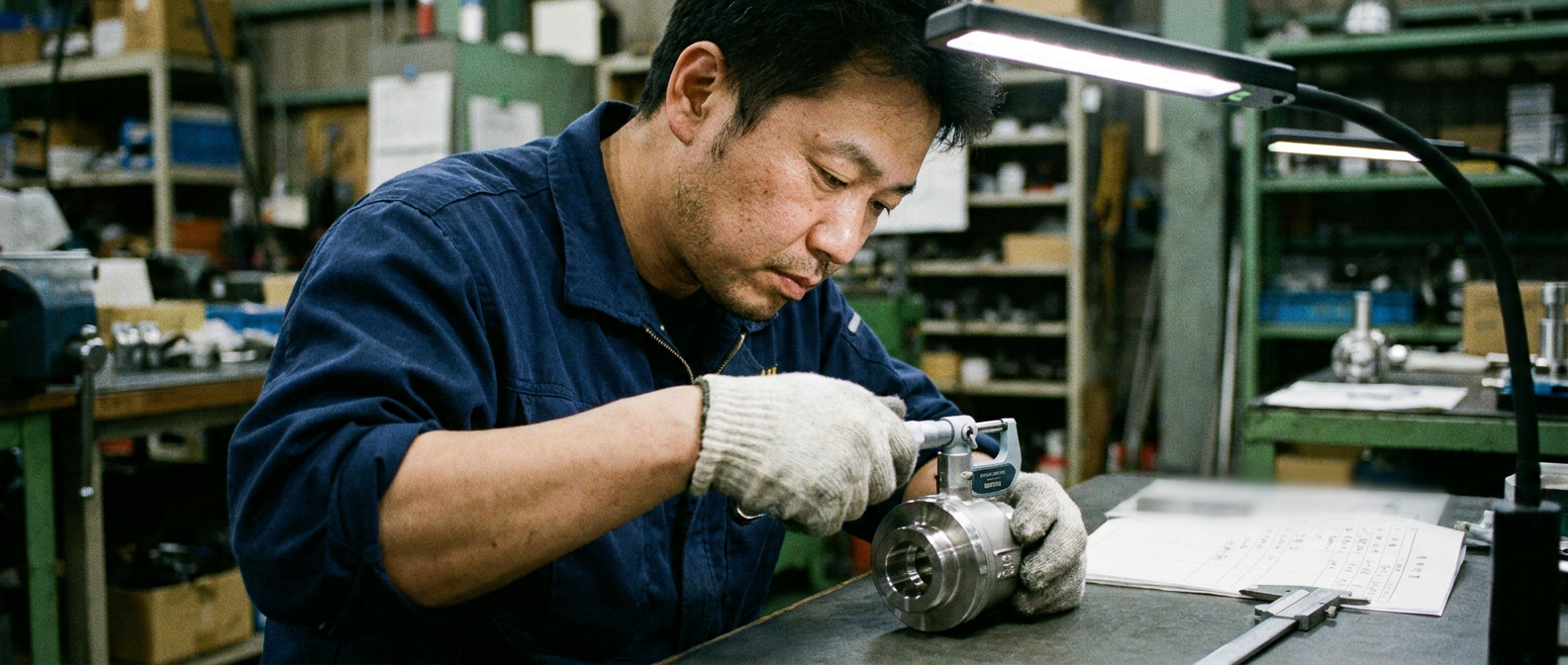
Le secteur manufacturier taïwanais s'est développé à partir de l'usinage de précision, et cet héritage se reflète dans la régularité des pièces : la même soupape, fabriquée de la même manière, à chaque fois.
Systèmes qualité et essais
La constance n'est pas une question de chance ; c'est un système. Un fabricant digne de confiance met en œuvre un système de gestion de la qualité documenté, tel que ISO 9001, et soumettent les vannes à des essais de pression et d'étanchéité avant leur expédition. Lorsque chaque vanne est testée conformément à une norme reconnue avant de quitter l'usine, vous partez d'une étanchéité éprouvée plutôt que de découvrir un appareil défectueux lors de la mise en service. De nombreux fournisseurs à bas prix ne testent qu'un échantillon, voire ne procèdent à aucun test, ce qui explique en partie pourquoi leurs prix sont si bas.
Délais de livraison, assistance et flexibilité des commandes
Le prix n'est qu'un critère parmi d'autres dans la décision d'achat. Les longs délais de livraison par voie maritime pour les importations à bas prix immobilisent vos liquidités et vous exposent à des risques en cas de panne d'une ligne de production. Un fabricant réactif, capable de répondre à vos questions techniques, de prendre en charge des séries spécialisées de petite taille et d'assurer des livraisons fiables, est d'une grande valeur lorsque vous avez besoin rapidement d'une vanne adaptée.
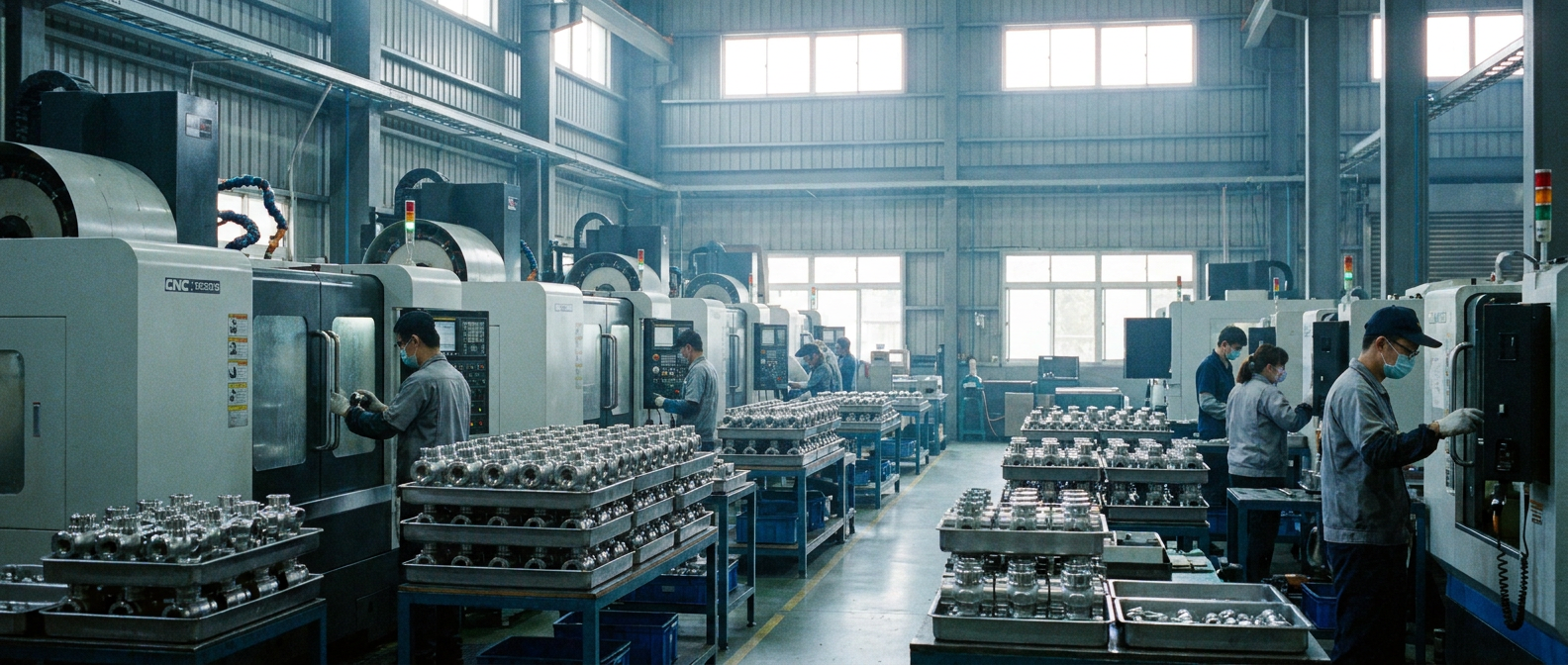
C'est là l'un des atouts majeurs des vannes fabriquées à Taïwan par des fabricants intégrés verticalement : une capacité de production en petites séries et à grande diversité de modèles, ainsi qu'un accompagnement technique direct, plutôt qu'un simple catalogue « à prendre ou à laisser ».
Coût total de possession : une comparaison en toute transparence
Si l'on compare ces facteurs, la perspective évolue : ce n'est plus une question de “ cher contre bon marché ”, mais de “ valeur contre risque ”.”
| Facteur | Vanne fabriquée à Taïwan | Importation à bas prix |
|---|---|---|
| Matériau | Certifié, traçable 316/316L | Alliage souvent non certifié |
| Tolérances et finition | Précis, régulier | Variable d'un lot à l'autre |
| Tests | Testé avant expédition | Échantillon ou aucun |
| Délai de livraison / assistance | Une assistance technique plus rapide | Assistance à long terme, mais limitée |
| Durée de vie | Plus long, prévisible | Plus court, imprévisible |
| Coût réel | En baisse au fil du temps | Plus le nombre de défaillances est élevé, plus… |
Quand une importation à bas prix peut s'avérer acceptable
L'honnêteté prime sur les arguments de vente. Il existe des cas concrets où une vanne économique constitue un choix raisonnable : utilisation intermittente à basse pression dans des conditions non critiques ; installations temporaires ou jetables ; ou encore applications où une défaillance est sans conséquence et où le remplacement est aisé. Le risque augmente considérablement lorsque le fluide est corrosif, que la pression ou la température est élevée, que l’accès à la conduite est difficile, que les temps d’arrêt sont coûteux, ou lorsque l’hygiène et la sécurité sont en jeu. Le tableau ci-dessous propose une règle empirique rapide.
| Optez pour des vannes certifiées fabriquées à Taïwan | Une importation à bas prix pourrait suffire |
|---|---|
| Fluides corrosifs, chauds ou sous haute pression | Eau propre, faible pression |
| Conduites critiques / de sécurité / d'hygiène | Utilisation non critique et intermittente |
| Interruptions de service difficiles à résoudre ou coûteuses | Systèmes jetables faciles à utiliser |
| Une longue durée de vie est requise | Mission de courte durée / mission temporaire |
Pour les applications exigeantes ou nécessitant une hygiène rigoureuse — comme nos vannes sanitaires à collier de serrage ou en général applications industrielles — l'itinéraire certifié s'avère presque toujours le plus avantageux en termes de coût total. Vous pouvez découvrir l'éventail des options proposées dans notre Gamme de vannes à bille à commande manuelle et l'article de fond sur notre Page « À propos ».
Comment s'assurer qu'une vanne est vraiment de bonne qualité
Il ne faut pas se fier aveuglément à une étiquette. Quelques vérifications simples permettent de distinguer les vannes de qualité véritablement fabriquées à Taïwan des produits importés qui n’en ont que l’apparence. Avant de passer une commande importante, demandez au fournisseur un certificat d’essai d’usine attestant de la composition de l’alliage, ainsi qu’un rapport d’essai de pression et d’étanchéité pour la vanne elle-même ; un fabricant qui a confiance en son produit vous fournira ces deux documents sans hésitation. Examinez un échantillon de vos propres mains : une vanne de qualité présente une finition lisse, brossée ou polie de manière uniforme, une bille parfaitement ronde et brillante comme un miroir, un filetage net, ainsi qu’un fonctionnement ferme mais fluide, sans à-coups ni jeu.
Il convient également de se demander comment la vanne est testée — chaque unité ou seulement un échantillon — et si le fabricant dispose d’un système qualité documenté. Demander un seul échantillon avant un achat en gros constitue une assurance peu coûteuse et relève d’une pratique courante chez les fournisseurs réputés. Ces démarches ne coûtent presque rien et permettent de mettre en évidence de manière fiable les économies de moyens réalisées par une importation trop bon marché. Avec les vannes certifiées fabriquées à Taïwan, cette documentation fait partie intégrante de l’offre plutôt que de devoir faire l’objet d’une demande fastidieuse, ce qui constitue en soi un indicateur fort de la différence de qualité.
Questions fréquemment posées
Les vannes fabriquées à Taïwan sont-elles vraiment meilleures que les produits d'importation bon marché ?
Pour une utilisation exigeante, en général oui. L'avantage ne réside pas dans le label, mais dans ce qu'il implique : des matériaux certifiés et traçables, des tolérances strictes, des essais avant expédition et une assistance technique. Tout cela se traduit par une étanchéité fiable et une durée de vie prolongée. Pour des applications simples à basse pression, un produit importé bon marché peut être acceptable, mais pour les circuits critiques, la vanne certifiée revient généralement moins cher sur l'ensemble de son cycle de vie.
Comment une vanne peut-elle être qualifiée d“” en acier inoxydable 316 » tout en se corrodant ?
En effet, un marquage ne constitue pas une garantie. Si la composition chimique de l'alliage utilisé ne correspond pas à celle des véritables alliages 316/316L — c'est-à-dire les teneurs correctes en chrome, nickel et molybdène —, la vanne se corrodera malgré le marquage. La garantie réside dans un certificat d’essai en usine conforme à une spécification ASTM reconnue, qui atteste de la composition du matériau utilisé pour votre vanne. Les vannes de fabrication taïwanaise réputées peuvent fournir ce certificat.
Qu'est-ce qu'un certificat d'essai en usine et pourquoi est-il important ?
Un certificat d'essai d'usine atteste de la composition chimique et des propriétés de l'acier utilisé. Il vous permet de vérifier que vous avez bien reçu l'alliage pour lequel vous avez payé, ce qui est essentiel pour garantir la résistance à la corrosion et la sécurité. Les vannes vendues à bas prix ne sont souvent pas accompagnées d'un tel certificat, ce qui rend impossible l'identification du matériau réel.
Ce prix plus élevé est-il simplement dû à la majoration liée à la marque ?
Non. La différence de prix reflète en grande partie les coûts réels : matériaux certifiés, usinage de haute précision, essais complets, systèmes qualité et assistance technique. Une vanne moins chère permet généralement de réaliser des économies en faisant l'impasse sur un ou plusieurs de ces éléments, ce qui est précisément à l'origine des défaillances sur le terrain. Si l'on compare le coût total de possession plutôt que le prix unitaire, la vanne certifiée s'avère souvent plus économique.
Puis-je me procurer des vannes fabriquées à Taïwan en petites quantités ou sur mesure ?
Oui. Les fabricants taïwanais à intégration verticale pratiquent souvent une production à faible volume et à grande diversité de produits ; ils sont donc ouverts aux commandes plus modestes ou spécialisées que les grandes usines étrangères ont tendance à refuser — tout en offrant un accompagnement technique et des délais de livraison plus courts et plus prévisibles que ceux liés à un approvisionnement à bas prix à l'étranger.
Conclusion
Le choix entre des vannes fabriquées à Taïwan et des produits importés à bas prix ne se résume que rarement au montant figurant sur la facture ; ce qui compte, c'est ce que ce montant permet d'obtenir. Des matériaux certifiés, des tolérances précises, une qualité vérifiée avant expédition et une assistance réelle coûtent un peu plus cher à l'achat, mais bien moins sur toute la durée de vie de la ligne. Réservez les importations bon marché aux applications mineures et optez pour des vannes certifiées et traçables lorsque la fiabilité, la sécurité ou l'hygiène sont primordiales. Si vous souhaitez obtenir des certificats de matériaux, des données d'essais ou un devis pour votre application, contactez notre équipe, ou consultez l'intégralité de la liste des produits.